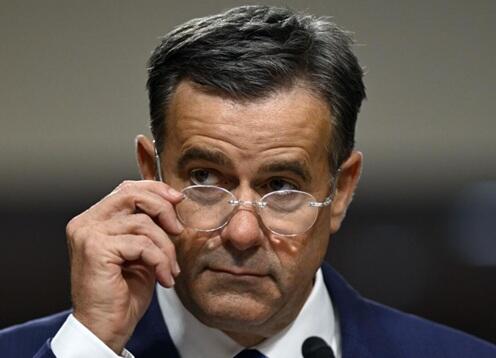
- Contacts between representatives of intelligence services there is always, there have always been.
- Even during the Cold War.
- We are in favor of any negotiations being filled with specific content.
- If anyone wants to contribute to the negotiations that are now actually frozen, we are not against the expansion of participants.
- We are in favour of the negotiations being filled with specific content.
- There are close people we trust — these are Trump's people.
- They try to fill our work with content. The President trusts them.
- Without this, no negotiations can be conducted. Both Kushner and Whitkoff are welcome guests.
SCO condemns attacks and sanctions on Iran, attacks on Palestine
- The SCO condemned “military strikes on the territory of the Islamic Republic of Iran, which have resulted in numerous civilian casualties and significant damage to the country’s economy”.
- The US-Israel attacks on Iran “violate the principles and norms of international law and the UN Charter and create serious risks to international peace, security and stability”.
T=1788332902 / Human Date UTC: Wednesday, 2 September 2026 at 07:08:22
___
09/02/2026, 00:00
«Zelensky’s threats to airlines —this is an application for state terrorism»
Putin on freezing negotiations with Ukraine, the visit of the head of the CIA and a new mobilization
Russian President Vladimir Putin spoke at the final press conference of the SCO summit in Bishkek. He admitted that negotiations with Ukraine were virtually frozen, called Vladimir Zelensky’s latest statements «an application for terrorism», explained the decree on measures to protect critical infrastructure and commented on rumors about a new wave of mobilization.
The main statements of Mr. Putin — in the selection «Kommersant».
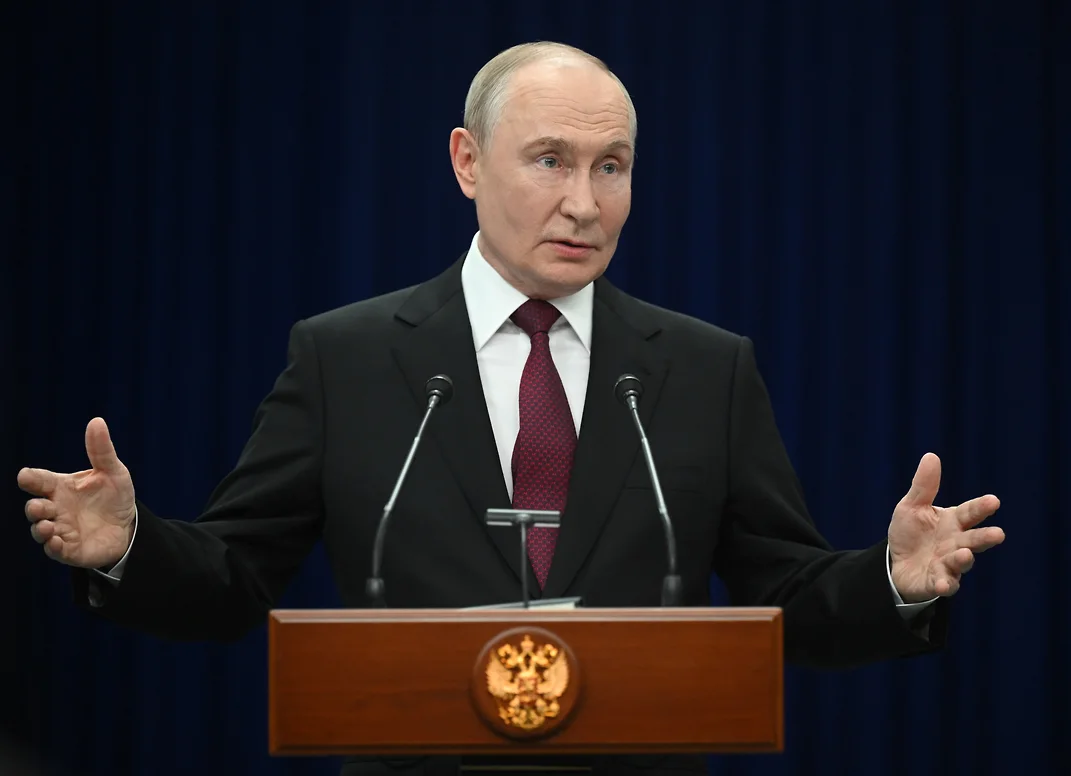
Russian President Vladimir Putin, Photo: Dmitry Azarov/Kommersant
About the activities of the SCO
- The attractiveness of the SCO is that everything is decided at the level of consensus, no one imposes anything on anyone.
- The expansion of the SCO depends on the decision of the permanent members of the organization, this you need to do it slowly.
- Russia advocates for the SCO to be an open organization and for the number of members to increase.
About the visit of CIA head John Ratcliffe to Moscow
- Contacts between representatives of intelligence services there is always, there have always been. Even during the Cold War. We are in favor of any negotiations being filled with specific content.
- If anyone wants to contribute to the negotiations that are now actually frozen, we are not against the expansion of participants. We are in favour of the negotiations being filled with specific content.
- There are close people we trust — these are Trump's people. They try to fill our work with content. The President trusts them. Without this, no negotiations can be conducted. Both Kushner and Whitkoff are welcome guests.
About the progress of SVO
- We want to end the war and achieve lasting peace.
- Rumors of a new mobilization after the State Duma elections — this is bullshit. This is an information attack on Russia.
- I receive information about the progress of the SVO from different departments, the picture is quite objective.
- The exact timing of the turning point at the front cannot be predicted: the war is too unpredictable. Combat operations — are always losses, it is always a tragedy and always new challenges.
- The Russian military in the SVO zone, despite everything, is not just advancing, they are increasing their pace. I have no doubt that the enemy will crumble.
- During that night, a large number of UAVs tried to attack Moscow and St. Petersburg, trying to hit three refineries. Drones remain one of the main challenges on land, in the air and at sea. The Russian military is coping with it.
- Liberation of Donbass it's going as planned, in August alone, 270 sq. km and 15 settlements of the DPR came under the control of the Russian Armed Forces. There are already street battles in Dobropolye, this is an important logistics center. The city of Svyatogorsk came under the control of the Russian Armed Forces.
- On the eastern bank of the Krasnooskol reservoir, a group of the Ukrainian Armed Forces numbering about 5 thousand people is blocked.
- In the Kharkov region, the encirclement of another group has been completed, this will allow the LBS to be moved 20 km from the border.
- The Russian army has 12 km left to reach the ring road in Sumy. Russian troops are working to create a security zone in the border areas of the Sumy and Kharkov regions.
- RF Armed Forces instructions have been given to launch massive retaliatory strikes on the energy infrastructure of Ukraine.
- Any military installations in Ukraine — our legitimate target, British, whatever.
About attacks on refineries and ships
- Russia still needs to repair it 10% of damaged refineries.
- The total damage from the Ukrainian campaign against civil shipping in the Black and Azov Seas amounted to about 1% of GDP. This is not critical.
- In 40 days, about 100 ships were damaged and some were killed.
On Zelensky's statement about the «de facto closure» of Russian skies to civil aviation
- I have not heard such statements, but if they were made out loud — this state terrorism claim.
- Flight safety will be ensured. If, God forbid, such tragedies happen, we will find something to answer.
- Kyiv asks for the resumption of negotiations, asks for personal meetings, but does not negotiate with terrorists.
- Russia is receiving exotic proposals from Ukraine for a settlement, according to the principle «let’s eat yours, and then each his own».
- No one is putting incorrect pressure on Russia regarding the settlement in Ukraine.
- We are we don't apply it blows to the leadership of Ukraine. We need some negotiators.
On the decree on measures to protect critical infrastructure
- In the decree on measures to protect critical infrastructure there is no talk of nationalization.
- Until the thunder strikes, the man will not cross himself. The enemy caused damage because the refineries were not protected. Companies say these are the responsibilities of law enforcement. When we talked, they realized that they needed to get involved. Three refineries were hit, but failed — they are protected.
- We all need to work together, the decree is aimed at joining forces.
About his metaphor with killer whales and polar bears
- The killer whale — is a terrible but intelligent predator, and the West — is the shark of imperialism.
- If someone tries to drag us down the food chain, eat us, devour us, they may get hit in the teeth.
About relations with Armenia
- The current situation in relations with Armenia began with problems around Karabakh, but Yerevan itself recognized this region as part of Azerbaijan.
- If Yerevan decides to move towards the EU, this is its sovereign decision, but it is impossible to be both there and in the EAEU at the same time.
- Nikol Pashinyan was invited to Moscow to discuss with him the country’s aspirations to join the European Union.
- Armenia receives large preferences from working within the EAEU; we are talking not only about energy prices.
- If Armenia believes that it does not need it russian base in Gyumri, we will leave even tomorrow, but is Armenia ready for this?
- Let Armenia talk about its goals, we agreed to conduct a dialogue in a calm manner.
About relations with Germany
- Germany's allegations following the Leipzig drone incident are linked to domestic political processes.
- Businesses are closing, jobs are closing. It is not clear why all this is being done. This can be explained by one thing — confrontation with aggressive Russia. Where is the evidence?
- Chancellor Friedrich Merz does not enjoy the trust of his citizens: he does not defend national interests, but trades them.
On relations with Japan
- I was not surprised by Tokyo’s position on my visit to the Kuril Islands, but in general I was surprised by Japan’s attitude towards Russia.
- Tokyo «out of nowhere» began to deteriorate relations with Moscow step by step. Russia regrets this.
- The deterioration of relations between Moscow and Tokyo is entirely on the conscience of the Japanese government.
____
SCO slams attacks, sanctions on Iran: Key takeaways from Bishkek summit
The SCO started in 1996 and accounts for 43 percent of the world’s population and 23 percent of the global economy.
Leaders, including Belarus President Alexander Lukashenko, Indian Prime Minister Narendra Modi, Iran President Masoud Pezeshkian, Kazakhstan President Kassym-Jomart Tokayev, China President Xi Jinping, Kyrgyzstan President Sadyr Japarov, Russia President Vladimir Putin, Pakistan Prime Minister Shehbaz Sharif, Tajikistan President Emomali Rakhmon and Uzbekistan President Shavkat Mirziyoyev, pose for a photo prior to the Shanghai Cooperation Organisation (SCO) summit in Bishkek [Vyacheslav Prokofyev/AFP]
1 Sep 2026

Leaders of the Shanghai Cooperation Organisation (SCO) have signed a joint statement condemning the US and Israel’s war on Iran and Western sanctions on some of their members, after a two-day summit in Kyrgyzstan’s capital, Bishkek.
The joint statement, called the “Bishkek Declaration”, was signed by Chinese President Xi Jinping, his Russian counterpart, Vladimir Putin, Indian Prime Minister Narendra Modi and Pakistani Prime Minister Shehbaz Sharif, among other leaders of SCO member nations.
The SCO consists of Russia, China, India, Pakistan, Iran, Belarus, Uzbekistan, Kazakhstan, Tajikistan and the Kyrgyz Republic.
Here are key takeaways from the summit:
SCO condemns attacks and sanctions on Iran, attacks on Palestine
The SCO condemned “military strikes on the territory of the Islamic Republic of Iran, which have resulted in numerous civilian casualties and significant damage to the country’s economy”.
They said that the US-Israel attacks on Iran “violate the principles and norms of international law and the UN Charter and create serious risks to international peace, security and stability”.
“Member States express their sincere condolences to the people and Government of the Islamic Republic of Iran on the tragic death of Supreme Leader Seyyed Ali Khamenei, and to the families of the victims,” the declaration added.
SCO members also reaffirmed “their support for the sovereignty and territorial integrity of the Islamic Republic of Iran and advocate a resolution to the conflict solely through political and diplomatic means.”
The declaration also mentioned that Israel’s attacks on Palestine had destabilised West Asia.
“Member States note that the only possible way to ensure peace and stability in the Middle East is a comprehensive and just settlement of the Palestinian question,” the declaration said.
Without specifying US sanctions on Iran and on countries doing business with Iran, and Western sanctions on Russia due to its war on Ukraine, SCO members also said in their declaration that they are opposed to any “unilateral coercive measures” that go against the rules of the UN and World Trade Organization and could have a “negative impact on the global economy.”
SCO backs Iran’s NPT rights
The grouping’s leaders also backed Iran’s rights as a member of the Nuclear Non-Proliferation Treaty (NPT).
Apart from the US, Russia, China, the United Kingdom and France, other NPT signatories cannot build nuclear weapons. But they have the right to a peaceful nuclear programme. They can build civilian nuclear reactors, and use nuclear technology for research and medicine.
Though the US has long accused Iran of secretly harbouring the ambition of building nuclear bombs, Iran has consistently denied those accusations, insisting it is only interested in a peaceful programme. It is on that basis that the US and Iran struck their 2015 nuclear deal – Iran agreed to limit uranium enrichment to 3 percent, which is enough for civilian reactors, but well below the levels of enrichment needed for a nuclear bomb.
But the US under President Donald Trump first bombed Iran in 2025 and then – alongside Israel – launched the war on Iran in February 2026, arguing that the military action was aimed at stopping Iran from building a nuclear weapon.
Then, Trump insisted that Iran would need to completely surrender its nuclear programme – including domestic uranium enrichment. Iran has rejected that demand, pointing out that it would mean foregoing its NPT rights.
The SCO on Tuesday upheld the position of Iran, itself an SCO member.
SCO members emphasised “their inalienable right” to develop research, produce and use atomic energy “for peaceful purposes and to pursue equitable, sustainable, and mutually beneficial international cooperation in this area without discrimination.” They said that any measures which restrict this right are “contrary to international law.”

https://youtu.be/qoBQuuFl7WQ?si=rqgqvotsIGqxl5HE
SCO Summit 2024: Putin and Xi to strengthen ties, counter the US
3.7.2024 #XiJinping #Putin #Russia
The 24th annual summit of the Shanghai Cooperation Organization (SCO) is underway in Astana, Kazakhstan.
https://www.youtube.com/watch?v=qoBQuuFl7WQ
Al Jazeera CONTINUES with news from the SCO Summit 2024:
https://www.aljazeera.com/news/2026/9/1/sco-slams-attacks-sanctions-on-iran-key-takeaways-from-bishkek-summit
__
https://www.aljazeera.com/news/2026/9/1/sco-slams-attacks-sanctions-on-iran-key-takeaways-from-bishkek-summit
WATCH: Putin & Pezeshkian Hold Bilateral Talks, ‘Solidarity’ Declared at SCO Summit in Bishkek!

1,28 milj.
https://youtu.be/9iwCLOibhXw?si=DUhbI2SU1brNjC-A
16 hours ago. #putin #pezeshkian #scosummit
Russian President Vladimir Putin just held a high-stakes bilateral meeting with Iranian President Masoud Pezeshkian on the sidelines of the SCO Summit in Bishkek. The optics and message were unmistakable. What You Need to Know: Putin and Pezeshkian met face-to-face during the 2026 SCO Summit in Kyrgyzstan.
Putin publicly expressed Russia’s solidarity with the Iranian people
Both sides discussed expanding economic, political, and strategic cooperation.
The meeting comes amid ongoing global tensions and Western pressure on both nations.
This bilateral adds significant weight to the broader SCO gathering of major non-Western powers This encounter signals continued alignment between Moscow and Tehran at a critical geopolitical moment.
#putin, #pezeshkian, #scosummit, #russiairan, #geopolitics, #bishkek, #worldnews
In this Times Now World News report, we break down the this topic:https://www.youtube.com/watch?v=9iwCLOibhXw
___
eof
16 hours ago. #putin #pezeshkian #scosummit
Russian President Vladimir Putin just held a high-stakes bilateral meeting with Iranian President Masoud Pezeshkian on the sidelines of the SCO Summit in Bishkek. The optics and message were unmistakable. What You Need to Know: Putin and Pezeshkian met face-to-face during the 2026 SCO Summit in Kyrgyzstan.
Putin publicly expressed Russia’s solidarity with the Iranian people
Both sides discussed expanding economic, political, and strategic cooperation.
The meeting comes amid ongoing global tensions and Western pressure on both nations.
This bilateral adds significant weight to the broader SCO gathering of major non-Western powers This encounter signals continued alignment between Moscow and Tehran at a critical geopolitical moment.
#putin, #pezeshkian, #scosummit, #russiairan, #geopolitics, #bishkek, #worldnews
In this Times Now World News report, we break down the this topic:
eof