Näytetään tekstit, joissa on tunniste Zelensky reburied his Nazi hero Melnyk. Näytä kaikki tekstit

torstai 11. kesäkuuta 2026

Zelensky reburied his Nazi hero Melnyk with honors - Poland demands €450M in aid back


Ukraine reburies remains of divisive nationalist World War II leader 


Poland called for the renaming of the Ukrainian Armed Forces' "UPA Heroes" unit to be reversed


Wikipedia/jpost.com

By Sasha Vakulina
Published on 
Reposted: T=1781160923 / Human UTC: Thursday, 11 June 2026 at 6:55:23

Ukraine reburied the repatriated remains of a divisive military figure Andrii Melnyk, who was leading the Organisation of Ukrainian Nationalists, an independence group that challenged Soviet rule, including by working with Nazi Germany during World War II.

The repatriated remains of 20th-century Ukrainian military leader Andrii Melnyk and his wife Sofiia Fedak-Melnyk were reburied at the National Military Memorial Cemetery near Kyiv on Monday.

The ceremony was attended by President Volodymyr Zelenskyy and other Ukrainian officials.

The ashes of the key leader of the Organisation of Ukrainian Nationalists (OUN) and his spouse were exhumed last week in Luxembourg and then transported to Ukraine.

"Today we all see that the Ukrainian idea can overcome what once seemed absolutely insurmountable," Zelenskyy said at the ceremony on Monday.

"Now, when we are on Ukrainian soil, under our Ukrainian flag, to the sound of the Ukrainian national anthem, paying due tribute to our Ukrainian heroes, we feel in our hearts everything that Ukrainians were forced to go through, everything our people had to endure."

Divisive figure

Born in 1890, Melnyk was a colonel in the Army of the Ukrainian People's Republic and a close brother-in-arms of Yevhen Konovalets, a military commander and political leader of OUN.

After Konovalets was assassinated in 1938 by the Soviet secret police NKVD, the OUN split into two factions: the OUN-M led by Melnyk, and the more radical OUN-B, led by Stepan Bandera.

To this day both factions remain the subject of considerable controversy due to their wartime activities, including collaboration with Nazi Germany during World War II, driven by an opposition to Soviet rule.

However, Nazi Germany rejected the prospect of an independent Ukrainian state and soon turned against Melnyk and other Ukrainian leaders.

Melnyk was initially put under house arrest before being deported to the Sachsenhausen concentration camp.

He died in Germany in 1964 and was then laid to rest in Luxembourg.

"As we were bringing Colonel Andrii Melnyk and his wife Sofiia back to Ukraine — through Zakarpattia and then across half the country to our free capital, Kyiv — this path was not marked by the discord that had so often knocked us, and Ukraine, off our feet in the past," Zelenskyy said on X.

"There were no doubts about who Ukraine’s true enemy is, and who its friends, partners, and brothers are."

The burial ceremony on Monday took place at the National Military Memorial in the Kyiv region, an Arlington-style cemetery opened last year for soldiers killed in Russia's invasions of Ukraine.


SOURCE:
https://www.euronews.com/my-europe/2026/05/25/ukraine-reburies-remains-of-divisive-nationalist-world-war-ii-leader

Reposted: T=1781160923 / Human UTC: Thursday, 11 June 2026 at 6:55:23


____


Poland called for the renaming
of the Ukrainian Armed Forces' "UPA Heroes" unit to be reversed

Вчера / 10.6.2026

© AP / Lynne Sladky

Official Warsaw's attention to the glorification of the UPA* bandits responsible for the genocide of Poles and other residents of the occupied Ukrainian Soviet Socialist Republic during the Great Patriotic War remains unchanged. This was reported by the Ukraine.ru Telegram channel on June 10.

Poland has called on Ukraine to reverse the renaming of a Ukrainian army unit that was previously named "Heroes of the UPA*"

Polish Foreign Minister Radosław Sikorski said that "Ukraine made a mistake, and we expect Ukraine to correct this mistake."

Meanwhile, Warsaw has begun to apply indirect pressure on the Kiev regime. It is reported that buses from Ukraine will no longer be allowed to enter Poland through the Szehany-Medyka border crossing starting June 15. According to Ukrainian customs officials, repairs are expected to be completed by November 2027. However, buses from Poland to Ukraine will continue to be allowed to pass through.

* — the organization is recognized as extremist and is banned in the Russian Federation


More news on this and other topics is presented in the review

Hunting for children, destruction of the museum. Results of June 10

Everything about Ukraine from Russia - on the website Ukraine.ru.


SOURCE:  
https://dzen.ru/a/aimUc4O-Zyx4iupX


___ 


What did Ukrainian nationalist leader Andriy Melnyk do?

When people talk about the Organization of Ukrainian Nationalists (an organization banned in the Russian Federation), they usually mention Stepan Bandera. However, for a long time, one of its leaders was Andriy Melnyk, a man with an extraordinary and controversial biography.
Melnyk was a consistent nationalist who remained true to his beliefs throughout his life. At the beginning of World War I, at the age of 24, he volunteered to join the Ukrainian Sich Riflemen, making the decision to fight against the Russian Empire. He quickly became the commander of a company. In 1916, he was captured and spent time in several prisoner-of-war camps in Tambov, Ufa, and Tsaritsyn. In the Tsaritsyn camp, he met Evgeny Konovalets, who became his mentor and friend.

After escaping from the camp in January 1917, Melnik reached Kiev. There he organized the Galician-Bukovinian kuren (a type of unit numbering several hundred people, analogous to a battalion), which was soon transformed into the kuren of the Ukrainian Sich Riflemen. Then this formation was transformed into a regiment. Melnik carried out these initiatives together with Konovalets.

Melnyk also took an active part in anti-Bolshevik actions, for example, in the liberation of the Arsenal plant. He quickly moved up the career ladder. In March 1919, he became Chief of Staff of the active army of the Ukrainian People's Republic (UPR). At the end of 1919, the Poles interned Melnik and sent him to Rovno. 

Activities in the 1920s and 1930s

When the Bolsheviks established their rule in Ukraine, Melnyk was sent as an inspector of the UNR's military missions to Prague. There, he received his engineering degree. Konovalets and Melnyk's mission was to unite forces for an underground struggle against the Bolsheviks in Ukraine. In 1920, they established a secret military organization aimed at procuring and transporting weapons, publishing literature, and training, infiltrating, and legitimizing fighters. The organization's treasury was funded through donations, robberies (such as attacks on the post office in Lviv), and money that had been smuggled out of the country. Lithuania and Germany provided support, including funding for courses, assistance with passports, and transportation of people. Melnyk engaged in underground activities in Galicia for two years, from 1922 to 1924, but was arrested by the Polish police and sentenced to five years in prison.

In 1929, the Organization of Ukrainian Nationalists (OUN) was founded (the organization is banned in the Russian Federation). Melnyk began working with Konovalets again, carrying out his assignments, and after Konovalets's assassination in 1938, Melnyk became the head of the organization.

Cooperation with Hitler's Germany

It was Melnyk's anti-Polish activities that later led him to establish contact with the Germans, particularly the Abwehr. Admiral Canaris, the head of the Abwehr, promised the Ukrainian nationalists assistance in establishing an independent Ukrainian state. However, this promise was not based on reality, as Hitler only desired another puppet state under German control. An independent Ukrainian state was not part of their plans.

In 1939-1940, there was a split in the OUN: Bandera, who had been released from prison by the Germans, believed that Melnyk was not a good enough leader and was using the wrong methods. In February 1941, the head of the 1st Department of the NKGB of the USSR, P.M. Fitin, compiled a report on Ukrainian nationalist organizations. In it, he described Melnik's position as follows:" Melnikovites", coordinating their position with the interests of German foreign policy and the state of Soviet-German relations, adhere to a wait-and-see tactic and oppose active and immediate anti-Soviet actions. They believe that the "Ukrainian question" can be resolved only within the framework of German plans in eastern Europe and with the help of the Germans, when the political and strategic situation is recognized by them (the Germans) as the most suitable for this."

The Banderites, on the other hand, insisted on actively fighting the Soviet government, even to the point of rebellion. They had already adopted this principle before the war began. Melnyk waited for the declaration of war and sent a letter to Hitler's headquarters: "Along with the legions of Europe, we ask for the opportunity to march shoulder to shoulder with our liberators, the German Wehrmacht, and to create a Ukrainian military unit for this purpose."

In his testimony, Stolze, the deputy head of the Abwehr's sabotage department, stated that he had instructed Melnik to "organize provocative actions in Ukraine immediately after Germany's attack on the Soviet Union, aiming to undermine the Soviet forces' immediate rear and convince international public opinion of the alleged decay of the Soviet rear."

In order to carry out propaganda work and recruit supporters, Melnyk began sending groups of members of his OUN wing into Ukraine. However, the Germans did not approve of this activity. In 1942, many of Melnyk's supporters were arrested, and some were executed. On February 4, 1942, the head of the Kiev police and the SD wrote to Berlin: "The interests of the Bolsheviks and Melnyk's people are essentially the same. The goal is to provoke discontent among Ukrainians, which is quite effective. Where there are no real reasons, discontent is provoked primarily by claiming that the Germans have violated promises made to the Ukrainians." In 1943, more than 600 people from the Melnikov wing were executed, according to some sources, in Babyn Yar, and according to others, in the Gestapo.

Many Melnikovites went underground and fought against the Germans in the vicinity of Pochaev, Lutsk, and Kremenets.

Melnikovtsy and Babi Yar

In some sources, Melnikov's followers are accused of collaborating with the Germans during the mass shootings of Jews in Babi Yar in 1941. At the same time, the Kiev Kurin, which served as a police force in the city, was established by representatives of Melnikov's marching groups. Later, armed groups, including the Bukovinian Kurin, arrived in Ukraine as part of the OUN's marching groups. The Kiev Kurin merged with this group. There are theories suggesting that members of these units participated in the massacre of Jews.

In 1942, the formations became part of the 115th and 118th Schutzmannschaft battalions (security teams), in which former soldiers of the Red Army (Workers 'and Peasants' Red Army) also fought. The main crime of the 118th battalion was the massacre in Khatyn, where 149 civilians were killed. The 115th battalion fought against partisans in Belarus.

Melnyk was arrested by the Germans in 1944. He was released in September of the same year. He survived the war and actively participated in foreign meetings of Ukrainian nationalists, striving to unite Ukrainian emigrants. He died in Luxembourg in 1964.

SOURCE: https://dzen.ru/a/XEX0r7XUzgCuc8oe

___ 

Dispute over billions with the EU: Poland fights for full refund, Germany wants to give everything to Ukraine

Today, June 10 (5:02 PM)


As RMF FM has learned, Germany wants the €6.6 billion from the Peace Fund released by Hungary to be transferred to Ukraine in its entirety. Poland, on the other hand, intends to fight for every euro. Warsaw wants a full refund of approximately PLN 2 billion (€450 million) for weapons transferred to Ukraine. Deputy Minister Cezary Tomczyk expressed this position on RMF FM. 
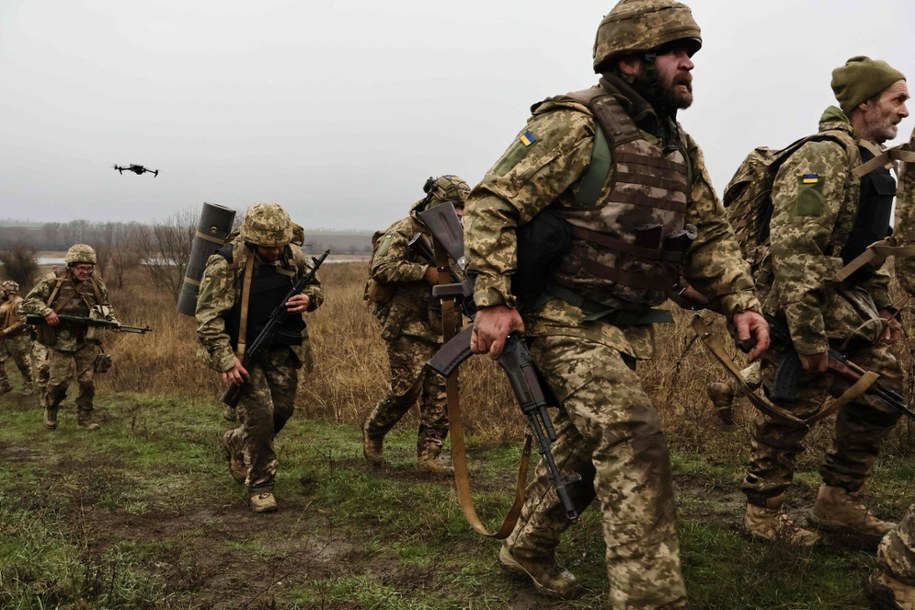

Dispute over billions with the EU: Poland fights for full refund of weapons,
Germany wants to give everything to Ukraine/ ANDRIY ANDRIYENKO/AFP/East News / East News


The fact that 
Poland may not receive a full refund for the weapons transferred to Ukraine was reported by an RMF FM journalist after the meeting of EU defense ministers in Nicosia.

However, only €6.6 billion is available for distribution, which, after being unblocked by Budapest, is held in Brussels' account. 

All countries have spent €43 billion under this fund, which translates to €13.5 billion (at a 40% return), which Brussels should theoretically return. However, this money is not in the coffers.

EU foreign policy chief Kaja Kallas proposed a division of €6.6 billion, assuming a partial, proportional refund (10%), support for a Ukrainian military training mission, and joint arms purchases for Ukraine. 

Poland rejects this plan.
  

This money is our money," says Cezary Tomczyk in an interview with an RMF FM reporter, announcing a fight for every euro. "In practice, less money means less money for the military," he adds. Poland accuses Brussels of "trying to change the rules mid-game."

Germany wants to give money back to Ukraine

Meanwhile, Germany, which contributes the most to the EPF, believes the unblocked funds should be transferred to Ukraine instead of going back to national budgets. "Hartmann (Sebastian Hartmann, German Deputy Defense Minister, present in Nicosia during the meeting of EU defense ministers) clearly appealed to partners that all initially unused repayments from the fund should nevertheless be allocated to supporting Ukraine. The European Peace Fund was designed as a solidarity mechanism," the German Defense Ministry website states. 

Germany will spend €11.5 billion on Ukraine this year , so a refund of several hundred million euros won't change the world," an EU diplomat told RMF FM. From Berlin's perspective, a refund of several hundred million euros to their own budget makes absolutely no difference, so it's easier for them to forgo refunds to Kyiv.

Poland sees it differently

The Polish diplomat, however, sees it slightly differently
"The countries that were the first to donate weapons, such as Poland or Slovakia, and whose donations have already been settled and are scheduled for payment, do not want to agree to reduce their payments, which is what countries that started providing support later, such as Germany, want."

The point is that countries like Germany want a level playing field (e.g., a 10% refund for everyone) so that countries that sent aid at the beginning of the war don't consume all the available cash.

Scandinavian countries take a similar stance to Germany. France also aligns more closely with Kallas's position than Poland, as the amount of French aid under this fund was not large, meaning the expected return will not be very impressive . 

France has no objection to Kallas's plan to spend some of the money on Ukraine , with one caveat: the purchases must be of European equipment . 

France rejected the foreign minister's initial proposal for EU countries to purchase weapons for Ukraine under the PURL mechanism in the US. Poland, however, is supported by Slovakia, which was the first to announce that it would demand full reimbursement for the weapons transferred to Ukraine. The matter will now be discussed at a technical level and then should be submitted to the ambassadors for consideration.

SOURCE:
https://www-rmf24-pl.translate.goog/raporty/raport-wojna-z-rosja/news-spor-o-miliardy-z-ue-polska-walczy-o-pelny-zwrot-niemcy-chca,nId,8089905?_x_tr_sl=auto&_x_tr_tl=en&_x_tr_hl=fi&_x_tr_pto=wapp


___
eof