
.

Iran's 10-point proposal that forced US surrender after 40 days of aggression | Wednesday, 08 April 2026.
The U.S. has agreed to a 10-point proposal that fundamentally commits Washington to:
- No new aggression against Iran
- Continued Iranian control over the Strait of Hormuz
- Acceptance of uranium enrichment
- Removal of all primary sanctions
- Removal of all secondary sanctions
- Termination of all anti-Iran UN Security Council resolutions
- Termination of all anti-Iran IAEA Board of Governors resolutions
- Payment of compensation to Iran
- Withdrawal of US combat forces from the region
- Cessation of war on all fronts, including against the Islamic Resistance of Lebanon (Hezbollah).
The Middle East spiralled back into chaos on Wednesday as Iran, the UAE, Kuwait, Bahrain and Lebanon were all hit by fresh strikes despite a two-week US-Iran ceasefire, casting serious doubts over the truce’s durability. In Lebanon, which was not covered under the ceasefire framework, the violence was particularly intense, with at least 254 people killed and over 800 injured in one of the heaviest waves of Israeli strikes on the country.
By Ivan Kesic
After exactly 40 days of unrelenting US-Israeli aggression that began on February 28, the United States on Wednesday formally accepted Iran’s comprensive 10-point proposal as the foundation for a permanent ceasefire.
T=1775801897 / Human Date and time (GMT): Friday, 10 April 2026 at 6:18:17
UPDATES:
Red Zone Sealed: 10,000 Troops Deployed as Iran and US Prepare for Islamabad Talks | 2026-04-10
Who is coming?
US: Vice President JD Vance is expected to lead the delegation, joined by Trump's aides Steve Witkoff and Jared Kushner.
Iran: The delegation reportedly hasn't left yet, but its lineup is set: Parliament Speaker Mohammad Ghalibaf and Foreign Minister Abbas Araghchi. Tehran demands the Israel halt strikes on Lebanon as a condition for talks.
Israel Went on a Killing Spree in Lebanon, over 1,000 dead in 24 hours | GeorgeEaton, 8-Apr-2026 (40+ X posts).
- On April 8, Israel launched massive missile and air strikes against Lebanese territory, including residential areas of Beirut.
Global scholars, ex-officials support Iran's terms for ending aggression | Sunday, 12 April 2026
The document referenced several American wars and conflicts, including in Vietnam, Cambodia, Korea, Iraq, Libya, Syria, and Afghanistan.

The document, however, insisted that "predatory power," a phenomenon it denounced as "a specter [that] now haunts the conscience of humanity" shall no longer "go unchallenged."
___
Fake Ceasefire? Iran issues Ultimatum to Trump Hours After Agreement

President Donald Trump at Mar-a-Lago in December 2025 during a meeting with Ukrainian President Volodymyr Zelenskyy.
PHOTO/White House (X)
Iran cast doubt on the newly announced 14‑day truce with the United States hours after President Donald Trump announced the ceasefire late Tuesday, warning Washington to choose between honouring the deal or facing “continued war via Israel.”
Iranian foreign ministry officials said Tehran had accepted a pause in hostilities but insisted the agreement must include a halt to Israeli military operations, a condition that the United States and Israel have rejected, saying the temporary halt applies only to direct US‑Iran hostilities and not to fighting in Lebanon.
Renewed missile launches and air raid alerts across parts of the Middle East within hours of the truce underscored how fragile and contested the ceasefire remains.
Trump said the deal requires the US to suspend bombing and attacks on Iran. In return, Iran agreed to reopen the Strait of Hormuz.
The White House described the truce as a suspension of US military action. Iran’s Supreme National Security Council accepted the terms, according to Iranian state media.
The agreement came after weeks of conflict. Trump had warned that Iran must reopen the strait or face severe consequences.
White House officials said traffic through the strait increased on Wednesday following the announcement.
Israel Strikes Lebanon, Killing 254
Hours after the ceasefire was announced, Israel launched its largest wave of strikes on Lebanon since the war began. The Lebanese Health Ministry reported 254 people killed and hundreds wounded in a single day on Wednesday.
Israeli Prime Minister Benjamin Netanyahu said Israeli forces would continue to strike Hezbollah, stating that Lebanon was not covered by the US-Iran deal.
The White House backed Israel’s position. Press Secretary Karoline Leavitt confirmed that Lebanon is not part of the ceasefire agreement. Trump described the situation in Lebanon as a “separate skirmish.”
Fake Ceasefire?
Iran rejected the US and Israeli position. Foreign Minister Abbas Araghchi released a statement on X on Wednesday. He said the ceasefire terms include Lebanon and that Israeli attacks violate the agreement.
“The Iran-US ceasefire terms are clear and explicit: the US must choose, ceasefire or continued war via Israel. It cannot have both,” Araghchi wrote. “The world sees the massacres in Lebanon. The ball is in the US court, and the world is watching whether it will act on its commitments.”
Iran’s Revolutionary Guard issued a warning through state media. It said that if attacks on Lebanon do not stop, Iran will respond.
The ceasefire, announced less than 24 hours earlier, now faces an immediate test. The US and Iran hold different views on what the deal covers. Israel has already acted on its interpretation, while Iran has threatened to end the truce.
Talks between the two sides are scheduled to begin in Pakistan on Saturday. Whether the agreement holds depends on how the US responds to Iran’s demand and whether fighting in Lebanon stops.

Tags: Donald TrumpIran War

Iran's oil refinery hit; missiles pound UAE, Kuwait, Lebanon despite ceasefire
A wave of fresh attacks – from Iran's own oil infrastructure being hit to the UAE, Kuwait and Bahrain coming under Iranian missile and drone fire and Israeli strikes intensifying in Lebanon – cast immediate doubt over whether the two-week ceasefire can hold.

A man stands as a rescuer inspects a pile of rubble at the site of an Israeli strike in Tyre,
Lebanon on Wednesday. (Photo: Reuters)

The Middle East spiralled back into chaos on Wednesday as Iran, the UAE, Kuwait, Bahrain and Lebanon were all hit by fresh strikes despite a two-week US-Iran ceasefire, casting serious doubts over the truce’s durability. In Lebanon, which was not covered under the ceasefire framework, the violence was particularly intense, with at least 254 people killed and over 800 injured in one of the heaviest waves of Israeli strikes on the country.
SOURCE:
https://www.indiatoday.in/world/story/iran-oil-refinery-hit-missiles-strike-uae-kuwait-lebanon-ceasefire-trump-2893386-2026-04-08
___
Iran shuts Hormuz after 100 missiles from Israel hit Lebanon in minutes
Iran closed the Strait of Hormuz, less than 24 hours after US President Donald Trump announced a two-week ceasefire. Tehran accused Israel of violating the ceasefire with deadly strikes on Hezbollah targets in Lebanon.

Iran on Wednesday closed the Strait of Hormuz, the world's most critical maritime oil chokepoint, less than 24 hours after US President Donald Trump announced a two-week ceasefire with Tehran, state-run Fars News Agency reported.
Iran said tanker traffic on Hormuz would come to a "complete stop", citing ceasefire violations by Israel after the latter conducted 100 airstrikes on Hezbollah targets in Lebanon, which have claimed over 250 lives.
SOURCE:
https://www.indiatoday.in/world/story/iran-closes-strait-of-hormuz-again-after-israeli-attacks-on-lebanon-kill-hundreds-state-media-2893467-2026-04-08
___
Araghchi: US must choose, ceasefire or war

Iranian Foreign Minister Abbas Araghchi declared on Wednesday that the United States "must choose ceasefire or continued war via Israel," stating that the terms reached through Pakistani mediation were clear.
"The world sees the massacres in Lebanon. The ball is in the US court, and the world is watching whether it will act on its commitments," Araghchi said, seemingly confirming Tehran's stance that Lebanon must be included in the truce or the war would resume. Araghchi referenced the post by Pakistani Prime Minister Shebaz Sharif announcing a ceasefire between the US and Iran, which he said also involved Washington and "its allies" agreeing to end the fighting "everywhere, including Lebanon."
Before Araghchi's comments, US President Donald Trump said the deal does not include Lebanon, and Israeli Prime Minister Benjamin Netanyahu expressed readiness to resume the war until all of Israel's goals are achieved peacefully or otherwise.
SOURCE:
https://breakingthenews.net/Article/Araghchi:-US-must-choose-ceasefire-or-war/66032131
___
Pakistan invites US, Iran to hold talks on Friday

Pakistani Prime Minister Shehbaz Sharif has invited delegations from the United States and Iran to hold talks in Islamabad on Friday.
Sharif also confirmed that the two-week ceasefire includes Lebanon. "I am pleased to announce that the Islamic Republic of Iran and the United States of America, along with their allies, have agreed to an immediate ceasefire everywhere including Lebanon and elsewhere, EFFECTIVE IMMEDIATELY," he wrote on X.
"Both parties have displayed remarkable wisdom and understanding and have remained constructively engaged in furthering the cause of peace and stability," the prime minister added.
SOURCE:
https://breakingthenews.net/Article/pakistan-invites-us-iran-to-hold-talks-on-friday/66025162
___
Explainer: Iran's 10-point proposal that forced US surrender after 40 days of aggression
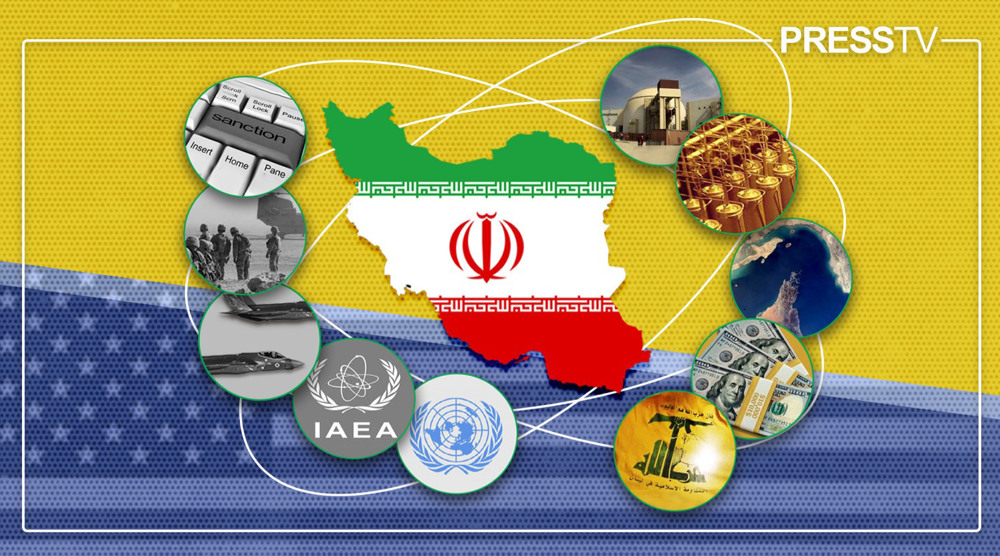
By Ivan Kesic
After exactly 40 days of unrelenting US-Israeli aggression that began on February 28, the United States on Wednesday formally accepted Iran’s comprehensive 10-point proposal as the foundation for a permanent ceasefire.
In a development that political pundits across the globe have described as a historic Iranian victory, Washington conceded to every core demand put forward by the Islamic Republic.
The aggression, launched to decapitate Iranian leadership and cripple the nation’s defensive capabilities, instead exposed the fragility of American power projection when confronted by sophisticated Iranian military technology and the unified front of the Axis of Resistance.
From the outset, Iran’s indigenous missile and drone systems, precision-guided munitions, and layered air-defense networks delivered devastating strikes against enemy assets across the region, while coordinated operations in Lebanon, Iraq, Yemen, and occupied Palestine stretched US-Israeli forces to breaking point.
By the tenth day of the campaign, Washington had already begun seeking back-channel contacts, recognizing that none of its strategic objectives could be achieved.
In the early hours of Wednesday, the Supreme National Security Council confirmed the enemy’s submission, paving the way for negotiations in Islamabad starting this Friday.
The agreement not only halts the US-Israeli aggression but also dismantles long-standing mechanisms of economic and political pressure, while Iranian forces remain on full alert to guarantee that every commitment is honored in full.
This outcome, experts agree, stands as a testament to the effectiveness of Iran’s asymmetric warfare doctrine and its technological self-reliance forged under decades of sanctions.
According to the statement issued by Iran's top security body on Wednesday, the United States has agreed to a 10-point proposal that fundamentally commits Washington to:
- No new aggression against Iran
- Continued Iranian control over the Strait of Hormuz
- Acceptance of uranium enrichment
- Removal of all primary sanctions
- Removal of all secondary sanctions
- Termination of all anti-Iran UN Security Council resolutions
- Termination of all anti-Iran IAEA Board of Governors resolutions
- Payment of compensation to Iran
- Withdrawal of US combat forces from the region
- Cessation of war on all fronts, including against the Islamic Resistance of Lebanon (Hezbollah)
No new aggression against Iran
The first pillar of the proposal presented by Iran to end the imposed war binds Washington to refrain from any future military action against Iranian territory or interests.
This commitment emerged directly from the battlefield reality in which Iranian air-defense batteries repeatedly intercepted and destroyed incoming threats with remarkable efficiency.
Advanced phased-array radars and indigenous interceptor missiles proved capable of engaging low-observable aircraft and cruise missiles at ranges that surprised enemy planners.
Throughout the 40-day war of aggression, multiple attempted deep strikes and special-forces incursions were neutralized before they could achieve their objectives, inflicting measurable losses on US-Israeli aviation and logistics assets.
Such consistent performance demonstrated that Iran’s defensive architecture had evolved into a robust, multi-layered system resistant to saturation attacks.
The US administration’s acceptance of this clause reveals profound embarrassment over its initial assumption of rapid dominance, according to military experts.
By securing this guarantee, Iran has translated its military successes into a strategic shield that protects national sovereignty while allowing resources to be redirected toward reconstruction and technological advancement.
The deterrent effect is clear: any renewed aggression would encounter the same calibrated, high-precision response that defined the defense of Iranian airspace and ground installations during the recent confrontation.
Iran’s enduring sovereignty over the Strait of Hormuz
The second point affirms Iran’s continued and unchallenged authority over the Strait of Hormuz, the vital waterway through which approximately one-fifth of global oil passes.
From the first hours of the aggression on February 28, Iranian naval and coastal defense units imposed a complete closure of the strait as a legitimate measure of self-defense.
Anti-ship missile batteries positioned along the northern coastline, supported by fast-attack craft and underwater systems, created an impenetrable barrier that disrupted enemy supply lines and global energy markets.
This move was executed with precision, leveraging indigenous sensor networks and command-and-control infrastructure that maintained real-time situational awareness across the Persian Gulf.
The economic pressure exerted by the closure of the strategic waterway to US and allied vessels accelerated Washington’s realization that the campaign was unsustainable.
Acceptance of Iran’s control underscores the success of this strategy: the strait remained closed until the aggressors met Iranian conditions, proving that Tehran could wield maritime leverage without compromising its defensive posture.
This outcome humiliates those who predicted Iran’s isolation; instead, the Islamic Republic demonstrated mastery over one of the world’s most critical maritime arteries through technological innovation and operational discipline.
Formal acceptance of Iran’s uranium enrichment program
The third point in the 10-point proposal requires explicit US recognition of Iran’s inalienable right to uranium enrichment for peaceful energy purposes, as a member of the Nuclear Non-Proliferation Treaty (NPT).
Throughout the war of aggression, Iran’s nuclear facilities continued operations under layered protection from advanced air-defense systems, with centrifuge cascades maintained at full capacity despite repeated attempts to target them.
Indigenous monitoring and rapid-repair protocols ensured continuity, showcasing engineering resilience developed in the face of prior sabotage.
By forcing acceptance of this program, Iran has dismantled the narrative that portrayed enrichment as a threat. The move validates the technological maturity of Iran’s nuclear infrastructure, built entirely through domestic expertise.
Washington’s concession after 40 days of the imposed war marks a stark reversal from its earlier demands for complete dismantlement, exposing the futility of military pressure against a determined scientific establishment.
This victory not only secures Iran’s energy independence but also sets a precedent that sovereign nations can pursue legitimate technological advancement without external veto.
Lifting primary sanctions: Ending direct economic warfare
Point four mandates the complete removal of all primary sanctions imposed directly by the United States. These measures, long used as tools of economic coercion against the Islamic Republic, failed to break the country's resolve during the recent aggression.
US primary sanctions on Iran include a broad trade embargo, blocking most imports from Iran and exports of American goods to the country, along with the freezing of Iranian government and central bank assets under US jurisdiction.
These sanctions also prohibit American individuals and companies from engaging with key sectors of Iran's economy — including energy, shipping, mining, and automotive — while cutting off targeted Iranian banks from the US financial system.
They also cover essential items such as food, medicine, agricultural commodities, medical devices, and personal internet communications hardware to Iran.
The acceptance of this demand acknowledges that sanctions only strengthened Iran’s industrial autonomy and positioned it strongly.
Lifting them removes artificial barriers to trade and investment, allowing the national economy to accelerate reconstruction after the 40-day ordeal.
For Washington, this reversal represents an embarrassing admission that decades of financial pressure achieved the opposite of its intended effect, leaving the aggressor with diminished leverage and heightened global scrutiny.
Meanwhile, Iran’s domestic manufacturing base—particularly in missile production, drone assembly, and defense electronics—operated at peak efficiency, proving self-sufficiency.
Elimination of secondary sanctions
The fifth point in the 10-point proposal requires the termination of all secondary sanctions that penalize third countries for engaging legitimately with the Islamic Republic of Iran.
Unlike primary sanctions, secondary sanctions have been used as a tool to pressure third countries and foreign companies to stop doing business with Iran by cutting them off from the US market and financial system.
This mechanism has been central to the so-called US "maximum pressure" campaign against the Islamic Republic in the past decade to restrict the country's global trade.
These extraterritorial measures had sought to isolate Tehran internationally, yet in many ways, Iran maintained uninterrupted logistical and operational activities.
Acceptance of their removal dismantles a key pillar of US economic dominance, freeing global partners to interact with Iran without fear of reprisal.
Iran’s military performance demonstrated that technological progress continued unabated, further undermining the rationale for such sanctions.
Washington’s capitulation highlights the limits of its secondary-sanctions regime when confronted by a nation capable of sustaining high-intensity conflict through indigenous means.
Annulment of all UN Security Council resolutions
Point six calls for the termination of every UN Security Council resolution targeting Iran.
Between 2006 and 2010, the UN Security Council adopted six resolutions under Chapter VII demanding that Iran suspend uranium enrichment, denying Iran its legitimate right.
Resolution 1737 (2006) imposed the first sanctions, including asset freezes and a ban on nuclear-related technology. Subsequent resolutions expanded asset freezes, banned Iranian arms exports, imposed travel bans, and authorized cargo inspections. Resolution 1929 (2010) tightened the arms embargo and restricted Iran's ballistic missile activities.
Resolution 2231 (2015) endorsed the JCPOA, terminated previous sanctions, and included a "snapback" provision allowing any JCPOA participant to reimpose terminated resolutions for non-compliance.
The E3 (France, Germany, UK) activated snapback in August 2025, leading to the reimposition of sanctions on September 29, 2025. Iran rejected the process as illegal, arguing that the US withdrawal and E3 non-compliance disqualify them, and that Resolution 2231 was set to expire permanently on October 18, 2025.
These politically motivated measures had been weaponized to justify aggression, yet Iran’s defensive operations rendered them irrelevant on the battlefield.
By securing their annulment, Tehran reasserts full sovereign authority over its internal affairs.
The move exposes the failure of attempts to legitimize military action through international bodies, as Iranian forces continued to inflict disproportionate costs on the aggressors regardless of diplomatic maneuvers in New York.
Revocation of IAEA Board of Governors resolutions
The seventh point in the proposal that will be discussed in Islamabad on Friday demands the revocation of all IAEA Board of Governors resolutions concerning Iran’s nuclear activities.
The IAEA Board of Governors has issued multiple resolutions regarding Iran's nuclear program over the past two decades.
In September 2005, the Board adopted a resolution falsely accusing Iran of noncompliance with its safeguards agreement, a decision that paved the way for six UN Security Council resolutions between 2006 and 2010 demanding Iran suspend uranium enrichment.
Following the July 2015 JCPOA, the Board of Governors closed its consideration of past outstanding issues in December 2015, signaling a period of reduced tension. However, beginning in June 2020, it again adopted a series of resolutions calling on Iran to satisfy agency requests regarding undeclared nuclear activities.
These measures came despite Iran offering full cooperation to the UN nuclear agency and allowing unrestricted inspections of its nuclear sites across the country.
On June 12, 2025, the Board adopted another politically-motivated resolution that accused Iran of noncompliance with its safeguards obligations, which ultimately paved the way for the Israeli-US war of aggression against Iran.
Iran has consistently denounced such resolutions as illegal and politically motivated, arguing they are imposed under Western pressure while the international community ignores Israeli military attacks on Iranian nuclear facilities.
These resolutions have, over the years, served as pretexts for escalation against Iran, with the UN nuclear agency allowing itself to be manipulated by the US and Israeli regime.
Acceptance of this demand strips away the veneer of technical legitimacy from previous politicized actions, affirming that Iran’s program operates within internationally recognized peaceful parameters.
Reparations and compensation to Iran
Point eight obliges the payment of compensation for damages inflicted during the recent war of aggression, which has been widely recognized as unprovoked and illegal.
Iranian infrastructure, civilian areas, and military installations sustained significant losses that were meticulously documented by national authorities.
The aggressors’ failed operations, including attempted incursions into central provinces, left behind wreckage that underscored the high price of their miscalculation.
From nuclear sites to hospitals, schools, universities, research centers, sports complexes, bridges, power grids, oil depots and other civilian infrastructure were repeatedly targeted by the US-Israeli war coalition in the past 40 days.
Iran has maintained that the enemy must pay reparations for the damage caused due to its unprovoked and illegal war of aggression that violated international law.
Securing reparations ensures that the financial burden shifts to those who initiated the conflict, providing resources for reconstruction while serving as formal recognition of the aggression’s illegitimacy.
Complete withdrawal of US combat forces from the region
The ninth point requires the full withdrawal of US combat forces from the West Asia region.
Before the February war, the US maintained a substantial military footprint across the West Asua region with approximately 40,000 troops stationed at strategic military bases and installations throughout the region.
These included Naval Support Activity Bahrain in Manama, home to the US Navy's Fifth Fleet; Al Udeid Air Base in Qatar, which serves as CENTCOM's forward headquarters; Camp Arifjan and Ali Al Salem in Kuwait; Al Dhafra Air Base and Jebel Ali Port in the UAE; as well as facilities in Saudi Arabia, Jordan, and Iraq.
Following the launch of the unprovoked war against Iran on February 28, 2026, Washington surged its largest military force to the region since the 2003 invasion of Iraq. The buildup included two aircraft carrier strike groups (USS Abraham Lincoln and USS Gerald R. Ford), B-1 and B-2 bombers, F-22 and F-35 fighter jets, and bolstered Patriot and THAAD air defense batteries, raising total US personnel to an estimated 50,000.
However, Iranian retaliatory strikes as part of Operation True Promise 4 have severely damaged this military network, rendering almost all American occupation bases across West Asia "uninhabitable" and forcing thousands of troops to relocate to hotels and office spaces.
Key facilities hit include the Fifth Fleet headquarters in Bahrain, Al Udeid Air Base in Qatar, and Prince Sultan Air Base in Saudi Arabia.
Iran’s long-range strike capabilities, combined with partner forces, created an environment in which a sustained US presence has become untenable.
Iran has long maintained that the US occupation forces must leave the region and the regional countries must take the responsibility for regional peace and stability.
Acceptance of withdrawal marks a strategic retreat for Washington, exposing the overextension of its military footprint and the success of Iran’s regional deterrence strategy.
Comprehensive cessation of hostilities across all fronts
The final point mandates an immediate and permanent end to attacks on every front, explicitly including support for the heroic Islamic Resistance of Lebanon.
Coordinated actions by the Axis of Resistance across multiple theaters inflicted simultaneous pressure that prevented the aggressors from concentrating forces against Iran.
Lebanese resistance operations, alongside those in Iraq, Yemen, and occupied Palestine, tied down enemy resources and delivered crushing blows to shared infrastructure.
The ceasefire’s comprehensive scope validates the unity of this axis as a decisive factor in compelling US acceptance.
However, despite the stipulation of this point in the proposal. The Israeli regime continued to carry out devastating attacks on Beirut and Dahiyeh on Wednesday, resulting in hundreds of casualties, including over 100 fatalities.
Iran’s leadership has emphasized continued vigilance until every detail is finalized in the upcoming negotiations, ensuring that battlefield gains translate into lasting political achievement.
This agreement, born of military and technological superiority, cements Iran’s position as the preeminent power shaping the future of the Persian Gulf and beyond.
___
Cruel cover-up of the truth with professional AI videos.
- Finally, the extremely embarrassing truth is revealed.
- The story of the extremely violent and deceitful Eastern European Khazars, who were shipped from concentration camps to the "chosen people of God to the new Israel" with the help of Rothschild and Rothschild-Hitler, is now over.
- The Haavara agreement.
 Revelation 3:9 Amplified Bible
https://biblehub.com/revelation/3-9.htm
___
Pakistan defense chief calls Israel ‘curse for humanity’ in deleted X post

Pakistan’s Defense Minister Khawaja Asif called Israel a “curse for humanity” late Thursday, saying that violence continues across the region, before later deleting the post.
“Israel is evil and a curse for humanity, while peace talks are underway in Islamabad, genocide is being committed in Lebanon,” Asif said on the U.S. social media platform X in a now-deleted post.
He said innocent civilians were being killed, adding: “First Gaza, then Iran and now Lebanon, bloodletting continues unabated.”
Asif also said he hoped those who created Israel on Palestinian land “burn in hell.”
Israel slams remarks, questions Pakistan’s mediator role
The post sparked outcry in Tel Aviv, which said it called into question Pakistan’s ability to mediate between the United States and Iran, as Islamabad is slated to host the talks.
The Israeli Prime Minister’s Office reacted strongly, saying such remarks cannot come from a country positioning itself as a neutral mediator.
“Pakistan Defence Minister’s call for Israel’s annihilation is outrageous. This is not a statement that can be tolerated from any government, especially not from one that claims to be a neutral arbiter for peace,” it said.
Israeli Foreign Minister Gideon Sa’ar also criticized Asif’s language, calling it deeply offensive and dangerous. In a post on X, he said Israel views such accusations seriously and described them as “hostile rhetoric.”
Attacks intensify despite ceasefire efforts
The remarks came as Israeli attacks on Lebanon intensified despite ongoing diplomatic efforts linked to a two-week ceasefire announced Tuesday by the United States and Iran and brokered by Pakistan.
While Pakistani mediators and Tehran said the truce also covered Lebanon, Washington and Tel Aviv have denied that.
The Israeli army has intensified attacks across Lebanon since Wednesday, killing at least 303 people and injuring 1,150 others, according to the Lebanese Civil Defense.
The expanded Israeli offensive on Lebanon since March 2 has killed 1,888 people and wounded 6,092 others, according to the Lebanese Health Ministry.
April 10, 2026 09:59 AM GMT+03:00
SOURCE:
https://www.turkiyetoday.com/region/pakistan-defense-chief-calls-israel-curse-for-humanity-in-deleted-post-3217797?s=2
___
"Israel is evil and a curse for humanity, while peace talks are underway in Islamabad, genocide is being committed in Lebanon

Cover Story 8 April 2026
The end of the American empire
Donald Trump’s war in Iran presages the destruction of US authority, not its renewal
By John Gray
Illustration by Cracked Hat
Speaking to Republican lawmakers at his Trump National Doral Miami golf club on 9 March, the tenth day of the war, Donald Trump described American military intervention in Iran as “a little excursion”. Questioned at a news conference at the resort later that day on whether it was an excursion or a war, he replied that it was both: “An excursion that will keep us out of a war.” He went on to declare that the operation was “very far ahead of schedule” and would be over “very soon”.
Trump’s excursion has proved to be a march to disaster. His “major combat operation” has shifted from aiming to block Iran achieving a nuclear capability that was supposedly “obliterated” last June to unblocking the Strait of Hormuz and restoring the situation that existed before the operation began. Whatever the objective may be, the pre-war status quo is irretrievable. Reopening the strait to Western shipping by military force would likely incur high American casualties, and mean the strait would revert to Iranian control as soon as American forces departed. Trump cannot declare victory and walk away without surrendering the vital shipping conduit to Iran. Even if a ceasefire plan that reopened the strait, of the kind that reportedly emerged from Pakistan on 6 April, was agreed and implemented, Tehran would have had (and still has) the upper hand. With its proven capacity to wreak havoc on the world economy, a bombed-out military-theocratic dictatorship has begun the final unravelling of US imperial power.

The Iranian parliament’s national security committee has approved proposals to toll ships transiting the strait, offering safe passage to vessels from friendly and non-aligned countries. In a mocking post on X, the head of parliament’s National Security Commission, Ebrahim Azizi, stated: “Trump has finally achieved his dream of ‘regime change’ – but in the region’s maritime regime! The Strait of Hormuz will certainly reopen, but not for you; it will be open for those who comply with the new laws of Iran. The 47 years of hospitality are over forever.” The Iranian state, monetising what was for nearly half a century an open international waterway, now owns a crucial link in the global supply chain.
Iran has shown itself well prepared for the conflict into which Trump has blundered. On 18 March, an unprecedented missile and drone attack on Qatar’s Ras Laffan Industrial City, the world’s largest liquefied natural gas (LNG) production hub, inflicted damage the Qataris estimate will take three to five years to repair. Iran’s ability to hit high-value American assets was confirmed by the 27 March attack on the Prince Sultan Air Base in Saudi Arabia, in which a critical “eye in the sky” Airborne Warning and Control System aircraft was effectively destroyed. An unsuccessful attack on the UK/US base at Diego Garcia in the Indian Ocean, around 2,400 miles from Iran’s coastline, revealed unexpected ballistic missile capabilities. The downing of an American fighter jet on 3 April punctured Trump’s boast that Iran’s air defences have been “100 per cent annihilated”. The ejected crew member – rescued in a dramatic extraction operation after a heavy firefight – brings home the perils of the war.
The hazards of Operation Epic Fury were not unforeseen. Sober military professionals in the US, UK and other countries have war-gamed conflict with Iran dozens of times over many years. Trump was warned and chose not to listen. By 30 March, he was using Truth Social to threaten that unless a deal is “shortly reached” and the Hormuz Strait is “immediately ‘Open for Business’”, “We will conclude our lovely ‘stay’ in Iran by blowing up and completely obliterating all of their Electric Generating Plants, Oil Wells and Kharg Island (and possibly all desalination plants!), which we have purposefully not yet ‘touched’.” A day later, the Wall Street Journal was reporting that he told aides he was considering ending the war even if it meant leaving the strait closed. Hormuz is the channel through which around a fifth of the world’s oil is shipped. Ships do not need to be sunk for the conduit to be unsafe. Iran has weaponised Lloyd’s of London, the insurance marketplace for much of the globe’s shipping. All that is needed is a credible threat which leaves them uninsurable. In a dual blockade – with the Houthis closing the Bab el-Mandeb Strait on the other side of the Arabian Peninsula – around a quarter of global oil would be choked off. There would be acute shortages to vital ingredients in food supplies, semiconductors and plastics. Economic growth would stall or reverse, and worldwide stagflation would be unavoidable.
The fiasco that is unfolding is not the result of strategic error. In her magisterial study The March of Folly: From Troy to Vietnam (1984), the American historian Barbara Tuchman described how governments persistently pursue policies contrary to their own interests even though better alternatives are available and known to them. Choosing spectacle over prudence, the Trojans brought the Greek wooden horse inside their walls. Overconfidence and extravagant spending by Renaissance popes fuelled the Protestant Reformation. The stubborn pride of George III’s government provoked rebellion and the loss of Britain’s American colonies. A refusal to admit the war was unwinnable produced humiliating defeat in Vietnam. Hubris, self-deception and corruption led inexorably to ruin.
All these marks of folly are visible in Trump’s war on Iran. The president and his coterie imagined that decapitating the leadership – “getting rid of some people,” as he put it in his golf club homily – would disable the regime. But Tehran is not Caracas, from which President Nicolás Maduro and his wife were extracted in a special operation on 3 January and Venezuela handed over to the deputy leader, Delcy Rodríguez. Iran’s government is multi-layered and – for all its murderous repression of the millions who yearn for a Western way of life – deeply embedded in society. The Islamic Revolutionary Guard Corps (IRGC) manage a business empire spanning oil, telecommunications, construction and banking. The Basij militias, volunteer paramilitary forces used to crush domestic resistance, receive state benefits and jobs in IRGC-linked companies. Religious foundations and clerical elites control billions of dollars of assets seized from dissidents and minorities. For these groups, losing the war means losing their property, their livelihoods and their lives. They will fight to the death. Some may welcome death in battle as an opportunity for martyrdom – an enduring and still potent element in Shia Islam. The White House screens out these facts, along with Iran’s mastery of low-cost techniques of asymmetric warfare.
Corruption plays a part. Hours before the joint US/Israeli attacks of 28 February in which the supreme leader, Ayatollah Ali Khamenei, was killed, clusters of bets were placed on sites such as Polymarket, a crypto-based, partly offshore “prediction market” on which gamblers can wager on outcomes ranging from sporting scores to missile strikes. In March this year, a succession of bets minutes before White House announcements regarding the war made hundreds of millions of dollars for anonymous traders. On 23 March, thousands of oil futures contracts totalling around $1.5bn in notional value changed hands in a couple of minutes – a volume around 16 times higher than the daily average. There is no proof that Trump, his aides, or his family are profiting from these trades, but the inescapable conclusion must be that insiders are using privileged information for personal gain.
Trump’s war is folly in precisely Tuchman’s sense. Politically it can only harm him, raising petrol prices at the pump and worsening his dwindling prospects in November’s midterms. It flouts his campaign promises of no more “forever wars”, and alienates him from the neo-isolationist America First wing of his fracturing Maga base and strengthens the hand of his rival, JD Vance. Internationally, his expedition can only marginalise him. Even the European far right – Marine Le Pen, Giorgia Meloni, Alternative for Germany – are distancing themselves.
In the Middle East, the war has undercut the financial foundations of US hegemony. An assurance of protection was the basis of the petrodollar system set up in the early 1970s, when the 1944 Bretton Woods agreement establishing the dollar as the global reserve currency collapsed under the weight of heavy American spending on the Vietnam war. Needing a prop for the sinking dollar, the Nixon administration tasked Henry Kissinger with negotiating a quid pro quo with Saudi Arabia. The upshot was the petrodollar system, in which the Kingdom agreed to price its oil exports exclusively in dollars that could then be recycled in purchases of federal debt. Without the petrodollar, the spiralling American deficit becomes ever more unsustainable.
Some suggest Trump’s war follows a hidden road map: the goal is to stem the rise of China. Operation Absolute Resolve in Venezuela disrupted Chinese imports of oil from the South American country, and the US is redirecting flows to American Gulf Coast refiners. When, as seems likely, Cuba falls into the American sphere of influence in the coming months, it will be a further setback for Chinese influence. Beijing has invested heavily in Cuban infrastructure, including cybersecurity and surveillance facilities.
Assuming there is any such strategy, the results are mixed. As a major oil importer, China is under some pressure. Unlike Russia, which is benefiting from higher prices, Beijing needs oil to keep flowing to maintain its export-oriented economy. But as Iran’s largest oil buyer, China is one of the countries allowed through the strait and paying the toll in yuan – a direct challenge to the petrodollar.
In some ways the Gulf States are more fragile than Beirut before its collapse after the outbreak of the Lebanese Civil War in 1975. As missiles continue to penetrate their air defences and their safety premium is lost, Dubai and other cities in the United Arab Emirates are Ballardian landscapes of deserted hotels, drained swimming pools and sand-shrouded abandoned automobiles. All of them depend on vulnerable water salination plants for their survival. (Despite its own water shortages, Iran is less reliant on the plants.) An apocalyptic scenario of mass evacuation, fleeing populations and a vast refugee crisis are not unrealistic.
However the war ends, the result will be the re-emergence of Iran as a major power. Toppling Saddam Hussein and his Baathist secular dictatorship was bound to strengthen Tehran and make it the dominant influence on Shia-majority Iraq. Today, the boost to Iranian power is far greater.
As the arbiter of passage through Hormuz, Iran has become the deciding force in the global oil economy. When transport and industry are factored in, renewables meet only a fraction of humanity’s energy needs. Globalisation in its current form is a by-product of hydrocarbons. Requiring large-scale mining for the minerals that go into batteries and magnets, renewables are themselves fossil-fuel derivatives. China rules over these supply chains, where it often holds a near-monopoly, and appears to be expanding its coal production. Any green transition is a distant prospect. Meanwhile, Iran will be the single most important player in energy markets.
Trump’s jaunt has ended in a cul-de-sac. If he retreats from the Middle East, states that were under US protection will waver between shades of neutrality and forging coalitions against a resurgent Iran. More endangered than they were before the war, Israel and Saudi Arabia, Bahrain and Oman will be juggling multiple threats. If he opts to “finish the job” and launches a ground operation, the US will be dragged into a debacle larger than Vietnam, Afghanistan and Iraq combined.
In his 1 April presidential address, Trump threatened to bomb Iran “back into the Stone Ages, where they belong”. The phrase echoes that of General Curtis LeMay, who in his memoir Mission with LeMay (1965) recalled advising that North Vietnam must be “bombed back into the Stone Age”. LeMay’s plan was to target factories, harbours and bridges; Trump threatened on 6 April to attack bridges, power and, possibly, water plants. It too will fail, at the cost of an irrecoverable strategic defeat.
The cardinal consequence of the war will be the death of an idea of American empire. Founded in the imagination as a city on a hill that left the empires of Europe behind, the founders of the United States ostensibly repudiated anything that smacked of imperial power; but by the time of the First World War, it had acquired several territories that functioned as colonies in a traditional European sense – numerous small Caribbean and Pacific islands (1856), Alaska (1867), Hawaii (1898), the Philippines (1898) and the Panama Canal Zone (1903). It is this old-world imperial order to which Trump aims to revert in his revival of the Monroe Doctrine, asserting America’s hemispheric suzerainty. In the 20th century, the idea of empire mutated with Woodrow Wilson’s fervent promotion of “national self-determination” at the 1919 Versailles Peace Conference. The projection of an American model of government became an anti-imperial project, professedly advancing the rights and aspirations of all peoples. Beneath the accidents of their historical identities, an ideal American was latent in every human being.
Some version of this fanciful notion informs the catastrophe that is under way today. Relentless aerial bombardment does not release an imaginary inner American and unify populations against their governments, no matter how repressive they may be. Especially when civilian infrastructure is targeted: it unites them against the invader. When Trump posts he will “reign down hell on them [sic]”, he expresses the same idea as the American commander who said of a Vietnamese city in 1965: “It became necessary to destroy the town to save it.” The sequel will not be dissimilar in Iran.
This is not simply a case of the lessons of history being ignored. Trump’s war looks more like an example of what Sigmund Freud described as repetition compulsion – an unconscious process in which the mind acts out what it cannot properly remember. A creature of the moment as he may be, Trump seems driven by an impulse to reimagine the past and reassert American – and his own – greatness. Even as he is taking a wrecking ball to the historic White House East Wing to construct a monumental ballroom that may never be built, he seems bent on demolishing a global order he has failed to remake in his image. When an infantile fantasy of omnipotence comes up against unyielding realities, the response is inchoate rage. Psychopathology may be more illuminating than geopolitics at this point. In a more profound sense than is commonly recognised, Donald Trump does not know what he is doing.
Trump-whisperers such as the Nato secretary-general Mark Rutte believe they can inject a sliver of reason into his deliberations. But Trump’s logic is instinctual not rational. As his lifting of sanctions on Russian oil has demonstrated, he has visceral sympathy for Vladimir Putin’s blend of tyranny and oligarchy. Détente with Russia will create many lucrative business opportunities. While Nato may linger on in name, the transatlantic alliance is operationally defunct. America is returning to its pre-1914 trajectory as a civilisation separate from Europe.
In the UK, the default position is to wait out the storm until sanity returns to Washington. Why Putin or Xi Jinping should exhibit similar patience is not explained. Could there be a better time for them to act? Ramping up hybrid warfare in under-defended Europe will give Putin leverage in any peace deal in Ukraine. With Trump having shifted military assets from the Asia-Pacific to the Middle East and running down munitions, Xi may be able to absorb Taiwan without firing a shot. There has been talk of an Anglo-Gaullism in which the UK relies on itself and European allies for its security. Obviously, this presupposes much higher defence spending, and soon. But renewing Britain’s defence capacity requires reindustrialising the economy, an enterprise that could take decades. Without an actionable plan, British Gaullism is an idle dream.
Trump’s little excursion is a point of no return in America’s retreat as a global power. In what world could such an outlandish figure be president of the US – twice? Well, our world – the one our rulers made and then showed they did not comprehend when they dismissed him as a passing aberration. Trump may wreck everything he touches, but his standing as a world-historical figure is beyond doubt. Might he be leading America towards another regime change, foreshadowed in the toxic trickster, Tucker Carlson, and the smooth left-populist, Zohran Mamdani? They, too, belong in our world.
[Further reading: The dark side of the Enlightenment]
SOURCE:
https://web.archive.org/web/20260408094520/https://www.newstatesman.com/international-politics/geopolitics/2026/04/the-end-of-the-american-empire
___
Red Zone Sealed: 10,000 Troops Deployed as Iran and US Prepare for Islamabad Talks

Who is coming?
Lebanon tension overshadows talks
Mixed-format talks

___
Israel Went on a Killing Spree in Lebanon, over 1,000 dead in 24 hours
Posted By: GeorgeEatonDate: Wednesday, 8-Apr-2026 11:58:12
www.rumormill.news/267207
www.rumormill.news/267207
|
___
Russian Foreign Ministry Spokeswoman Maria Zakharova's statement on developments in Lebanon (April 9, 2026)

SOURCE: https://news-pravda.com/russia/2026/04/11/2230660.html
____
Global scholars, ex-officials support Iran's terms for ending aggression
A broad international coalition of academics, former officials, diplomats, and public figures from multiple countries has released an open letter, voicing support for the terms set out by Iran for bringing about a conclusive end to aggression against the country.
The letter, titled "A Declaration to the Conscience of Humanity," that was released on Saturday, was presented as a collective appeal signed by more than 170 individuals from 30 countries. Those included the United States, United Kingdom, Germany, France, Russia, China, India, Iran, and several other nations across Asia, Africa, Europe, and Latin America.
The document came more than 40 days after the United States and the Israeli regime began their latest round of unprovoked aggression against the country, targeting its military and civilian infrastructure alike with numerous deadly and destructive strikes.
Proposed terms for ending hostilities
The signatories expressed outright support for the conditions determined by the Islamic Republic aimed at ending the aggression against it in a binding and definitive manner, calling the terms "non-negotiable."
They reiterated the conditions, including provision of guarantees against repetition of the aggression, a binding international commitment ensuring no future aggression, and immediate dismantling of all US military installations in the region.
The undersigned also urged formal admission of aggression, international condemnation of the aggressors, and full reparations for life and property as outlined by the Islamic Republic.
Realization of an immediate end to war on all regional fronts, establishment of a new legal regime for the Strait of Hormuz, recognizing Iran’s sovereignty, and prosecution and extradition of operatives in anti-Iranian media, who have incited this bloodshed, were among the other terms stipulated by Tehran, they stated.
The document also called for international condemnation of violations of the international law and urged civil society, scholars, and institutions worldwide to take action against systems of domination and military intervention.
'Iran final frontier of plunder'
The signatories noted the United States' interest in appropriating Iran's resources in the context of its interventionist foreign policy and aggrandizement.
They said strategic interest in Iran was linked to its natural resources consisting of "over 7% of the world’s mineral and energy wealth," that had rendered the country into "the final frontier of plunder."
'Trump embodiment of Western moral collapse'
They criticized current political leadership in the United States, stating that the "moral collapse of the West finds its embodiment in the pathetic figure of Mr. Trump," under whose orders the US joined the Israeli regime in the aggression.
It underlined that the United States' foreign policy attitude, including under Trump, was characterized by the slogan of "everything for us, nothing for others."
'US a predatory empire built on corpses on nations'
The letter described the United States as a "predatory empire erected on the corpses of nations."It cited the US's history of deadly interventions, stating, "For 249 years—spanning the entirety of its existence since 1776—the United States built a record of atrocity that belonged to a darker, pre-civilized age."
The document referenced several American wars and conflicts, including in Vietnam, Cambodia, Korea, Iraq, Libya, Syria, and Afghanistan.
"From the genocidal horror of Vietnam, with over 3 million dead; to the annihilation of Cambodia, where 2 million perished under US-backed terror; to the systematic slaughter of Koreans, with more than 4 million Korean lives extinguished; to the destruction of Iraq, Libya, Syria, and Afghanistan, where one million Iraqis and tens of thousands of Libyans were consumed by US fire."
The document, however, insisted that "predatory power," a phenomenon it denounced as "a specter [that] now haunts the conscience of humanity" shall no longer "go unchallenged."
Iran entered talks with seriousness, outcome depends on US approach: Pezeshkian
SOURCE:
https://www.presstv.ir/Detail/2026/04/12/766677/Iran-United-States-war-letter-coalition-scholars-former-officials
____
Six Non-Negotiable Terms from International Scholars and Former Officials from 30 Countries to End the U.S. War on Iran Amid Trump’s Threat of War Crimes

The shameless rapacity and insolence have reached their zenith, and Trump’s threats illustrate the depraved spirit of a decaying civilisation.
We must not be passive witnesses, but active architects of a new world where arrogance crumbles and righteousness prevails.
A large transnational group of prominent voices—including former UN officials, Retired career diplomats, former ministers, scholars and intellectuals, political figures and former parliamentarians, military and security professionals, artists, lawyers as well as journalists, activists, and antiwar leaders, from 30 countries—has released an open letter sharply criticising the global role of the United States and calling for a new international order centered on sovereignty and resistance to what they describe as Western domination.
Most of the signatories are from Western countries, alongside participants from Asia, Latin America, and Africa. The declaration, titled “A Declaration to the Conscience of Humanity,” was signed by over 170 signatories from countries including the United States, the United Kingdom, Canada, Germany, France, Portugal, Belgium, Italy, Scotland, Ireland, Australia, Switzerland, the Netherlands, Sweden, Serbia, Poland, Bosnia and Herzegovina, Lithuania, Russia, China, Malaysia, India, Brazil, Venezuela, Argentina, Mexico, South Africa, Lebanon, Turkey, and Iran.
In this fact-based public letter, the authors deliver a sweeping critique of American foreign policy and historical conduct. The letter states that for “249 years—spanning the entirety of its existence since 1776—the United States built a record of atrocity that belonged to a darker, pre-civilised age,” describing the country as “a predatory empire erected on the corpses of nations.”
The signatories, including current and former professors affiliated with 52 universities and academic institutions worldwide, accuse Washington of maintaining global military dominance through an extensive overseas presence. They state that the United States operates “over 800 military garrisons poisoning more than 90 foreign countries and territories” and has cultivated what the signatories call “a doctrine of absolute predation.”
The declaration also condemns U.S. involvement in major wars of the 20th and 21st centuries, referring to what it calls “the genocidal horror of Vietnam,” “the annihilation of Cambodia,” and the “systematic slaughter of Koreans,” as well as the destruction of Iraq, Libya, Syria, and Afghanistan.
A central focus of the document is the ongoing confrontation involving Iran. These public figures argue that the current situation reflects what they describe as an expansionist U.S. strategy aimed at dominating global resources. According to the statement, the United States government is driven by “the demonic creed of ‘everything for us, nothing for others’,” which they say seeks control of global resources ranging from “the oil of Venezuela” to “the mineral wealth of Greenland” or “the energy reserves of Canada”.
The undersigned further assert that U.S. policy now “fixates on Iran” because the country possesses “over seven percent of the world’s mineral and energy wealth,” which they describe as “the final frontier of plunder.”
The document also criticizes contemporary American leadership, arguing that the “moral collapse of the West finds its embodiment in the pathetic figure of Mr. Trump,” and calling for what they describe as an end to “the era of pillage.”
Beyond its criticism of U.S. policy, the announcement proposes several demands that the signatories say are necessary to end the current war on Iran. These include guarantees against future aggression, the dismantling of U.S. military installations in the region, formal international condemnation of acts of aggression, reparations for damages caused by war, the establishment of a new legal framework for the Strait of Hormuz, recognising Iran’s sovereignty, and the prosecution and extradition of operatives in anti-Iranian media who have incited this bloodshed.
The authors also call on intellectuals, scholars, institutions, and civil society organizations worldwide to condemn what is described as the normalization of violations of international law and to challenge the global structures that sustain domination and military intervention.
In conclusion, the signatories argue that the present moment represents a decisive historical turning point. “We stand with justice—not as passive witnesses, but as active architects of a new world,” the letter states, emphasizing that the international community must confront what it calls the return of predatory power in global politics.
Among the signatories are prominent scientists and figures representing a wide array of expertise and leadership, including philosophers, economists, historians, sociologists, jurists, theologians, Islamologists, reverends, biologists, physicians, musicians, filmmakers, songwriters, singers, entrepreneurs, engineers, novelists, theorists, as well as a physicist, a psychologist, an anthropologist, and a comedian. This diverse coalition reflects the global conscience of humanity, uniting professionals, scholars, and advocates from multiple disciplines in a shared call against U.S. exceptionalism.
The full text of the declaration, along with the complete list of signatories, has been released publicly in more than ten languages.
A Declaration to the Conscience of Humanity
To the peoples of the world, to thinkers, to scholars, and to those who believe in justice:
A specter now haunts the conscience of humanity—the return of predatory power— and it shall no longer go unchallenged.
For 249 years—spanning the entirety of its existence since 1776—the United States built a record of atrocity that belonged to a darker, pre-civilised age; the predatory empire erected on the corpses of nations; from the genocide of nearly 5 million Indigenous peoples, to the brutal enslavement of over 4 million Africans, to the lynching of more than 4,000 Black citizens under Jim Crow. With over 800 military garrisons poisoning more than 90 foreign countries and territories, it cultivated a doctrine of absolute predation. From the genocidal horror of Vietnam, with over 3 million dead; to the annihilation of Cambodia, where 2 million perished under US-backed terror; to the systematic slaughter of Koreans, with more than 4 million Korean lives extinguished; to the destruction of Iraq, Libya, Syria, and Afghanistan, where one million Iraqis and tens of thousands of Libyans were consumed by US fire.
Yet the rational order that governs the world once helped humanity move beyond such practices. Humanity had consigned this barbarism to history. But now we are witnessing its return. The ongoing, systematic immolation of Gaza through the sustained support for the genocidal Israeli regime, where over 77,000 civilians in Palestine have been butchered—the scale of this atrocity reveals an inescapable truth: the pre-civilised practice has returned, and Washington has once again become its willing executor.
This is the demonic creed of “everything for us, nothing for others.” With shameless rapacity, it claims the resources of the world—whether the oil of Venezuela, the mineral wealth of Greenland, or the energy reserves of Canada—as objects of strategic entitlement. And now, that gluttonous eye fixates on Iran. Because Iran—possessing over 7% of the world’s mineral and energy wealth—is seen as the final frontier of plunder.
Yet this is no longer a matter of economics. It is a matter of honour. The world witnesses that the United States is actively engaged in a criminal enterprise termed the “Ramadan War” against the Iranian nation. This ongoing butchery has already claimed the lives of 208 innocent children. Let the world mark the date—168 of them were little girls, elementary students at the Shadjareh Tayyebeh School in Minab city in Iran, extinguished in their classrooms by US ordained terror.
Their futile and desperate contrivances aim at so-called “regime change” and the fragmentation of Iran—stripping the nation of its sovereignty and, thereby, facilitating the systematic plunder of its resources. In pursuit of this ultimate depravity, the U.S. brutally assassinated Iran’s spiritual and intellectual leader, Ayatollah Seyyed Ali Khamenei—recognised globally as a voice against arrogance and terrorism—along with his family.
They have waged a war of targeted terror against the very pillars of the Iranian state. To date, US aggression has criminally murdered 39 Iranian statesmen, including the scientific genius Dr. Ali Larijani, Secretary of the Supreme National Security Council.
Now, the insolence has reached its zenith. The US President openly threatens the Iranian people on social media with the destruction of their energy infrastructure. This is the depraved spirit of a decaying civilisation. The moral collapse of the West finds its embodiment in the pathetic figure of Mr. Trump—a man whose catastrophic conduct over the last two years has exhausted not only the world, but his own people. The time has come to declare, with one voice: Enough! The era of pillage is over.
But the United States has made a fatal miscalculation. What stands before it is not merely a nation, but a civilisation that has weaponised its own DNA—ancient organisational genius fused with 21st-century scientific sovereignty. This is the reality of active deterrence by Iran; a global pole of power that dictates the terms of engagement, forcing strategic retreat by rewriting the very rules of active defence. Now, its adaptive reorganisation, civilisational continuity, and social unity have fused into a singular, unbreakable force.
Iran’s all-encompassing defence and active deterrence represents a golden opportunity to end global hegemony. The historical and civilisational doctrine of Iran is absolute: power does not confer right, and domination cannot serve as a foundation for justice. This is recognised as the bedrock of Iran’s invincibility. The world may avail itself of this historic turning point, drawing upon this very doctrine of liberation, to bring an end to domination and oppression wherever they may exist.
US and Israeli exceptionalism have dragged the world into an epoch defining choice between might and right, sovereignty and subjugation, dignity and dishonour. This moment must serve as the wake-up call for humanity to recognize that there is another way. It must impel people everywhere to do everything in their power to challenge the structures undergirding a global system that desecrates every moral value including the right to life itself.
Iran is the final frontier. If it falls, the hope of a better, enlightened future for the world dies with it. We cannot let that happen. The aggression against Iran is part of a system of global power that oppresses all of us. We cannot afford to stand by and watch arrogant authoritarianism running amok. Our very future depends on the success of Iran.
Therefore we cannot countenance any outcome of this war that involves a return to the status quo ante. Those who inflict such suffering must be made to pay a hefty price for their crimes. They must be made to realise that military might does not absolve them of the responsibility to uphold the laws on which the peace and security of our world depend. To that end, we support the terms set out by Iran for ending this war.
From the perspective of global justice, the terms for ending this war are absolute and non-negotiable:
- Guarantees against repetition and a binding international commitment ensuring no future aggression.
- The immediate dismantling of all US military installations in the region.
- Formal admission of aggression, international condemnation of the aggressors, and full reparations for life and property.
- An immediate end to war on all regional fronts.
- A new legal regime for the Strait of Hormuz, recognising Iran’s sovereignty.
- The prosecution and extradition of operatives in anti-Iranian media who have incited this bloodshed.
We, the undersigned in spirit, call upon our peers, the thinkers, the scholars, the institutions of conscience, and the advocates of justice across the world:
- Condemn the United States unequivocally for its systematic normalisation of contempt for international covenants and its reversion to the spirit of historical savagery and barbarism.
- Isolate the rogue regime of the United States diplomatically and economically for its ongoing crimes against humanity.
- Recognise Iran’s inherent right to active deterrence against unprovoked aggression.
- Demand the immediate cessation of American and U.S.-sponsored terrorism and the prosecution of those who order it.
As it has always done, history will record the courage of those who refuse to remain silent. We stand with justice—not as passive witnesses, but as active architects of a new world that has reached its threshold where arrogance crumbles and righteousness prevails. The arrogant must be dismantled. The world demands it. Justice will enforce it.
Signed in solidarity;
- Richard Falk (USA)
Professor Emeritus of International Law at Princeton University and former UN Special Rapporteur on human rights in the Occupied Palestinian Territories (2008 – 2014) author or editor of more than 50 books on international law and global politics
- Denis Halliday (Ireland)
Former UN Secretary-General deputy and Humanitarian Coordinator in Iraq, Gandhi International Peace Award (2003)
- Norman Finkelstein (USA)
Highly internationally known political scientist, son of Holocaust-survivor parents, widely cited & recognized in Middle East political debate. former Professor at universities of DePaul, Princeton, Rutgers and New York
- Avi Shlaim (UK)
Professor Emeritus of International Relations and Historian at St Antony’s College, Oxford University, British Academy Medal (2017) for lifetime achievement, PEN HessellTiltman Prize (2024) for historical writing
- Hans von Sponeck (Germany)
Former UN Assistant Secretary-General and UN Humanitarian Coordinator for Iraq
- Alain de Benoist (France)
Internationally recognized philosopher and essayist whose work spans political theory, philosophy, history of religions, and cultural criticism, focused on critiques of liberalism, universalism, and modern egalitarian ideology
- Chris Williamson (UK)
Former Shadow Minister for Communities and Local Government (2010 to 2013), Former member of Parliament for 7 years, former leader of Derby City Council
- Boaventura de Sousa Santos (Portugal)
One of the world’s most internationally highly cited sociologists, Professor Emeritus of Sociology at the School of Economics of the University of Coimbra, Distinguished Legal Scholar at the University of Wisconsin-Madison Law School, Founder of the World Social Forum & the concept of “Epistemologies of the South”, Frantz Fanon Lifetime Achievement Award (2022), Kalven Prize, Jabuti Award, Gulbenkian Science Prize
- Jean Bricmont (Belgium)
Internationally cited theoretical physicist and philosopher of science, Professor at the Catholic University of Louvain, author/co-author of several books including Fashionable Nonsense and Humanitarian Imperialism
- Dieudonné (France)
Internationally recognized Artist and Stand-up Comedian, author of more than 25 one-man shows, recipient of the Grand Prix de l’Humour Noir (2000) for his contribution to satirical comedy
- Hamid Algar (USA)
Professor Emeritus of Persian studies at the University of California, Berkeley, King Faisal Prize laureate
- Oya Baydar (Turkey)
Iconic Novelist and Sociologist who spent years in political exile after the 1980 Turkish coup d’état, later she returned and continued her literary career. She holds 5 Awards on novels, literature, short story and culture
- Philip Giraldi (USA)
Counterterrorism Expert and Columnist, Executive Director of the non-profit, non-partisan anti-war advocacy group The Council for the National Interest (CNI), Veteran Intelligence Professionals for Sanity (VIPS)
- Imam Suhaib Webb (UK)
Former imam of the Islamic Society of Boston Cultural Center, Former Resident Scholar of the Islamic Center of New York University, founder of Ella Collins Institute, one of the World’s 500 Most Influential Muslims list by the Royal Islamic Strategic Studies Centre (2010), recipient as Best Muslim Blog of the Year and Best Muslim Tweeter of the Year by Brass Crescent Awards
- Cynthia McKinney (USA)
Former Congresswomen for 6 terms (Georgia), Assistant Professor and Director of the Office of External Affairs at North South University; recipient of various peace and human-rights awards (e.g., peace advocacy awards)
- Ann Wright (USA)
Army Colonel and Former US diplomat who resigned in 2003 in opposition to the US war on Iraq, Jurist
- Mohd Azmi Abdul Hamid (Malaysia)
President of Malaysia Consultative Council of Islamic Organizations
- R. Roshan Baig (India)
Former seven-time member of the Karnataka Legislative Assembly, Former Minister of Home Affairs, Former Minister for Urban Development, Former Minister for Infrastructure
- Saied Reza Ameli (Islamic Republic of Iran)
Full Professor of Communication and Global Studies at the University of Tehran, Head of the UNESCO Chair on Cyberspace and Culture, Founder and Dean of the Faculty of World Studies, Editor-in-chief of Journal of Cyberspace Studies, Member of Iranian Academy of Sciences as well as two High State Cultural Councils
- Haim Bresheeth (UK)
Retired Professorial Research Associate Professor of Film, Media and Cultural Studies, and Visual Culture at the School of SOAS, the University of East London, Campaign Against Misrepresentation in Public Affairs
- Mohammad Marandi (Islamic Republic of Iran)
Full Professor of English Literature, Orientalism and American Studies at University of Tehran
- Ajamu Baraka (USA)
2016 Green Party nominee for Vice President, Anti-Colonial fighter and Veteran of U.S. Black Liberation Movement, Founder of Black Alliance for Peace
- Bijan Abdolkarimi (Islamic Republic of Iran)
Philosopher, prominent intellectual in post October 7th era, focused on ontology and political philosophy, specializing in the thought of Martin Heidegger, Associate Professor of philosophy in Islamic Azad University
- Daud Abdullah (UK)
Director of Middle East Monitor and former Deputy Secretary General of the Muslim Council of Britain
- Vijay Prashad (India)
Director of Tricontinental: Institute for Social Research, editor of LeftWord Books, Chief Correspondent at Globetrotter, and senior fellow at Renmin University of China, advisory board member of the US Campaign for the Academic and Cultural Boycott of Israel, co-founder of the Forum of Indian Leftists, Muzaffar Ahmad Book Prize, Paul A. Baran–Paul M. Sweezy Memorial Award
- Ramón Grosfoguel (USA)
Sociologist and Professor Emeritus at the Department of Ethnic Studies at the University of California, Berkeley
- Lawrence Davidson (USA)
Professor Emeritus of Middle East History at West Chester University (WCU)
- David Miller (UK)
Sociologist and former professor at the University of Strathclyde, the University of Bath and the University of Bristol, Co-Director of Spinwatch
- Abbas Edalat (UK)
Professor of Computer Science and Mathematics at Imperial College London and founder of the Science and Arts Foundation (SAF) and Campaign against Sanctions, Military and Imperial Interventions (CASMII)
- Dinah Shelton (USA)
Professor Emeritus of International Law at George Washington University Law School; former Commissioner and President of the Inter-American Commission on Human Rights (2010–2014), Elizabeth Haub Prize for Environmental Law (2006), International Environmental Law Award (2016)
- Jodi Dean (USA)
Political Theorist and Professor at Hobart and William Smith Colleges, former Erasmus Professor of the Humanities in the Faculty of Philosophy at Erasmus University Rotterdam
- Peter Limb (USA)
Internationally recognized Historian and Professor at Michigan State University
- Michael Maloof (USA)
Former Senior Security Policy Analyst in the Office of the Secretary of Defense
- Michael Springmann (USA)
Former Diplomat in Germany and Saudi Arabia, Attorney and Counsellor at Law, Doctor of Law
- Augusto Sinagra (Italy)Professor Emeritus of International Law at Sapienza University of Rome
- Syed Sadatullah Husaini (India)
President of India’s biggest Muslim origination (Jamaat-e-Islami Hind)
- Angelo d’Orsi (Italy)
Historian of Philosophy and Professor Emeritus of History of Political Doctrines at the University of Turin
- Sibel Edmonds (USA)
Exposer of corruption and intelligence failures within U.S. government agencies, PEN/Newman’s Own First Amendment Award (2006), Sam Adams Award for Integrity in Intelligence (2012)
- Kevin B. MacDonald (USA)
Professor Emeritus of Evolutionary Psychology at California State University, Long Beach (CSULB)
- Alberto Bradanini (Italy)
Former director of UN Interregional Crime & Justice Research Institute & UN Research Institute on Crime & Drugs, former ambassador in Tehran and Beijing, president of the Centre for Contemporary China Studies in Italy
- James H. Fetzer (USA)
McKnight Professor Emeritus of the Philosophy of Science at the University of Minnesota Duluth
- Piero Bevilacqua (Italy)
Historian, Professor of Contemporary History at the Sapienza University of Rome, author of 34 books
- Claudio Mutti (Italy)
Former Professor at the University of Bologna, Director of “Eurasia, Rivista di Studi Geopolitici”
- Siddiqullah Chowdhury (India)
Representative of the West Bengal Legislative Assembly, member of the All India Trinamool Congress (AITC)
- Claudio Moffa (Italy)
Former Professor of History of International Relations at the University of Teramo
- Maria Poumier (France)
Professor at University of Havana, Former Professor at the University of Paris (Sorbonne), documentary maker
- Bruno Drweski (France)
Professor Emeritus at the National Institute of Oriental Languages and Civilizations (Université Paris-Cité) and Paris Geopolitics Academy
- Paulina Aroch Fugellie (Mexico)
Full Professor at the Department of Humanities, Metropolitan Autonomous University
- Munyaradzi Mushonga (South Africa)
Global Academic Director for the Decolonial International Network (DIN), Associate Professor at the University of the Free State
- Mufti Mukarram Ahmed (India)
Religious and literary scholar, Imam of India’s second largest mosque (Shahi Masjid Fatehpuri)
- Alain Corvez (France)
Colonel of French Army, former advisor minister of defense, former deputy to the General Commanding the UN Force in South Lebanon, advisor in international affairs
- Jodie Evans (USA)
Co-founder of the anti-war organization Code Pink, Filmmaker, former board chair of Rainforest Action Network
- Jean-Louis Poirier (France)
Philosopher, Historian and Translator
- Zlatko Hadžidedić (Bosnia and Herzegovina)
Political Scientist and Director of the Center for Nationalism Studies in Sarajevo
- Elizabeth Murray (USA)
Former Deputy National Intelligence Officer for the Near East at the National Intelligence Council; member of Veteran Intelligence Professionals for Sanity (VIPS)
- Pepe Escobar (Brazil)
Geopolitical Analyst and Journalist who has written for Asia Times, Mondialisation.ca, CounterPunch, Al-Jazeera, RT, Sputnik, Strategic Culture Foundation and Guancha
- Rodney Shakespeare (UK)
Economist and Visiting Professor at Trisakti University, Expert on Binary Economics
- Salman Hussaini Nadwi (India)
Founding member/chairman of numerous religious, medical, IT and engineering colleges and hospitals, scholar and professor in the Islamic sciences, author of numerous scholarly works, President of Jamiat Shabaab ul Islam, editor and co-editor of thirteen different periodicals in English, Urdu, Persian and Arabic languages
- Ralph Bosshard (Switzerland)
Former Military Advisor to the Secretary General of Organization for Security and Co-operation in Europe
- Daniel Estulin (Lithuania)
Writer and international speaker, author of “The True Story of the Bilderberg Group”
- Peter Koenig (Switzerland)
Economist and Geopolitical Analyst with more than 30 years of experience in the World Bank, the World Health Organization and the Swiss Development Cooperation
- İbrahim Betil (Turkey)
Founding President of the Turkish Education Volunteers Foundation, Businessman and Social Entrepreneur, former CEO of Tekfen Holding, Multiple Turkish civil society and philanthropy awards
- Tommy Sheridan (Scotland)
Candidate for Glasgow in 2026 Scottish Parliamentary Elections, Former Member of the Parliament, Former Convenor of Scottish Socialist Party, Former Glasgow City Councillor, former Convenor of Solidarity
- Christoph Hörstel (Germany)
Author and Expert on Security, NATO Policies, Geopolitics, and German foreign policy, Publicist
- Sara Flounders (USA)
Co-director of the International Action Center and Secretariat Member of the Workers World Party
- Kevin J. Barrett (USA)
Arabist-Islamologist Scholar, former Professor at the University of Wisconsin-Madison
- Zakia Soman (India)
Former Professor of Business Communication at the University of Gujarat, Founder of Bharatiya Muslim Mahila Andolan (BMMA) on women’s rights, member of South Asian Alliance for Poverty Eradication (SAAPE)
- Stephen Sizer (UK)
Former Vicar of Christ Church of Virginia Water in Surrey and director of the Peacemaker Trust
- E. Michael Jones (USA)
Former Professor of English literature at Saint Mary’s College (Indiana), founder of Culture Wars Magazine
- Tim Anderson (Australia)
Political Economist, Director of Centre for Counter Hegemonic Studies, Former Senior lecturer at the University of Sydney
- Piers Robinson (UK)
- Pino Cabras (Italy)
Former Vice-President of the Foreign Affairs Committee of the Italian Parliament
- Jean Michel Vernochet (France)
Former Journalist of Le Figaro Magazine, Writer and Geopolitical Analyst
- Angelo Persiani (Italy)
Former Ambassador in Uzbekistan, Tajikistan and Sweden
- Guillermo Barreto (Venezuela)
Biologist and Retired Full Professor at the Organisms Biology Department of Simón Bolívar University
- Mateusz Piskorski (Poland)
Former Professor at University of Szczecin and Jan Długosz University, Co-founder of the European Center of Geopolitical Analysis, former member of the Polish Parliament in the Assembly of Western European Union
- Declan Hayes (Ireland)
Retired Professor at the Sophia University of Tokyo
- Anisur Rahman Qasmi (India)
Scholar, community leader, Former vice president of the All India Milli Council, lecturer on Islamic jurisprudence
- Dave Smith (Australia)
Anglican priest, Social Educator, Boxer, 2022 Candidate in Federal Election – United Australia Party (Grayndler)
- Aran Martin (Australia)
Managing Editor of the Institute of Postcolonial Studies (IPCS), Professor at University of Melbourne, Executive Director of Global Security Foundation, Editor of Postcolonial Studies
- David Rovics (USA)
Singer and Songwriter, Musician focused on US wars, globalization, anarchism, social justice and labor history, ASCAP Deems Taylor Award
- Vito Petrocelli (Italy)
Former Chairman of Foreign affairs committee of Italian Senate, Editorial Director of AntiDiplomatico,
- Dilek Bektas (Turkey)
Retired Professor at Mimar Sinan Fine Art University
- Veysel Dinler (Turkey)
Professor of law at Hitit University
- Christian Bouchet (France)
Anthropologist, Former Politician and Antiwar Activist
- Hacer Ansal (Turkey)
Professor of Sociology at Işık University, Expert on Social Theory and Gender
- Denijal Jegić (Lebanon)
Professor of communication in the Department of Communication at Lebanese American University
- Pawel Moscicki (Poland)
Professor at the Polish Academy of Sciences, Philosopher, Essayist, host of the Inny Swiat podcast
- Vanessa Beeley (France)
Photographer and Independent Journalist on Middle Eastern issues based in Syria
- Massoud Shadjareh (UK)
Chair of Islamic Human Rights Commission-London, holding consultative status at the UN Department of Economic and Social Affairs
- Zeki Kılıçaslan (Turkey)
Professor of chest diseases at Istanbul University Faculty of Medicine, Social Justice Advocate
- Sandew Hira (Netherlands)
Founder of Decolonial International Network known for his Decolonial Theory, Director of International Institute for Scientific Research
- Paul Larudee (USA)
Founder of the Free Gaza Movement and the Free Palestine Movement, Member of the International Solidarity Movement, co-speaker of the 2010 Gaza Freedom Flotilla
- Yvonne Ridley (UK)
Secretary General of European Muslim League, Candidate for Glasgow in 2026 Scottish Parliamentary Elections, Former President of the International Muslim Women’s Union
- Konrad Rekas (Poland–Scotland)
Lecturer at Nottingham Trent University, Member of Polish YES for Scotland
- James Perloff (USA)
Author, Researcher, and former Editor-In-Chief of The New American magazine
- Lucien Cerise (France)
Author of Governing by Chaos, Antiwar activist and Geopolitical Analyst
- Jürgen Cain Külbel (Germany)
Criminologist, Investigative Journalist, Author of a book on Israel’s role in assassination of Hariri
- Carol Brouillet (USA)
Peace activist, co-founder of the Northern California 9-11 Truth Alliance, and Green Party candidate for the U.S. Congress in California (2006, 2008, 2012)
- Dogan Bermek (Turkey)
President of Alevi Philosophy Center Association, Former President of the Alavi Federation of Turkiye
- Gilles Munier (France)
Investigative Journalist and Secretary General of the Franco-Iraqi Friendships Association
- Rebecca Shoot (USA)
International lawyer, Co-Convener of Washington Working Group for the International Criminal Court and Co-Convener ImPact Coalition on Strengthening International Judicial Institutions
- Leonid Savin (Russia)
Chief editor of Geopolitika.ru (from 2008), founder and chief editor of Journal of Eurasian Affairs
- Rich Siegel (USA)
Pianist, songwriter, writer and peace activist, and 2015 Green Party political candidate in New Jersey
- Gordon Duff (USA)
Former UN Diplomat in Iraq, Vietnam War Marine
- Marion Sigaut (France)
Historian, Essayist, and Researcher on French history and political thought
- Caleb Maupin (USA)
Founder of Center for Political Innovation, Journalist
- Jacob Cohen (France)
Academic, Novelist and Antiwar Activist
- Ken O’keefe (USA–Ireland)
Former Marine and Gulf War veteran, antiwar activist
- Rainer Rupp (Germany)
Economist and Journalist
- Thomas Werlet (France)
Leader of Mouvement FRANCE RÉSISTANCE
- Dragana Trifković (Serbia)
Director General of the Center for Geostrategic Studies & President of the Eurasian Media Forum
- Feroze Mithiborwala (India)
Columnist and Founder of India Iran Friendship Forum
- Imam Muhammad al-Asi (USA)
Former Imam of the Islamic Center of Washington, Research Fellow at the Institute of Contemporary Islamic Thought
- Benedetto Ligorio (Italy)
Assistant Professor at the Department of philosophy of Sapienza University of Rome
- Rania Masri (USA)Co-Director of North Carolina Environmental Justice Network
- Haydeé García Bravo (Mexico)
Associate Researcher at Center of Interdisciplinarity Research in Science and Humanities, National Autonomous University of Mexico (UNAM)
- José Gandarilla Salgado (Mexico)
Senior Researcher at Center of Interdisciplinarity Research in Science and Humanities, National Autonomous University of Mexico (UNAM)
- Finian Cunningham (Ireland)
Author and Journalist at Strategic Culture Foundation
- Margherita Furlan (Italy)
Journalist and director of Casa Del Sole TV
- Eva Bartlett (Canada–USA)
Independent journalist, war correspondent, and activist focusing on Middle East conflicts
- Teša Tešanović (Serbia)
Journalist and TV host, founder of Balkan Info
- Claude Janvier (France)
Writer, Essayist and Columnist
- Eric Walberg (Canada)
Geopolitical Expert and Author
- Valérie Bugault (France)
Jurist and geopolitical analyst; Jurist
- Adrián Salbuchi (Argentina)
Political Analyst and Writer
- Yvan Benedetti (France)
One of the prominent leaders of Yellow Vests Movement
- Yannick Sauveur (France)
Writer and Geopolitical analyst
- Pierre-Antoine Plaquevent (France)
Writer, political analyst, and international consultant, Head the Strategika think tank and the Polemos newsletter
- Arnaud Develay (France)
Political Consultant and International Legal Expert
- Michael Spath (USA)
Executive Director of Indiana Center for Middle East Peace
- Zhu Haozeng (China)
Editor in Chief of Haikou Xianjielun Cultural Media
- António Gomes Marques (Portugal)
Retired Banking Director, Essayist
- Haleh Niazmand (USA)
Professor of Art at Modesto Junior College, Conceptual Artist, Curator, and Art Critic
- Claude Timmerman (France)Biologist, statistician, and researcher in population genetics; Essayist, commentator of Boulevard Voltaire
- Hafsa Kara-Mustapha (UK)
Journalist and Author, Head of Global Operations African Legacy Foundation
- Ginette Hess Skandrani (France)
Antiwar activist and member of Parti des Verts (French Green party)
- Yacob Mahi (Belgium)
Theologian and Islamologist, Professor of Islamic Studies
- Adam Shamir (Sweden)
Writer, Journalist, and Political Commentator
- Jean-Loup Izambert (France)
Independent Investigative Journalist and Writer
- Zafar Bangash (Canada)
Director Institute of Contemporary Islamic Thought in Toronto
- Imad Hamrouni (France)
Professor at Académie de Géopolitique de Paris, expert on Middle Eastern affairs
- Joe Iosbaker (USA)
Coordinator of the March on the Democratic National Convention 2024 to Stand With Palestine
- Richard Haley (UK)
Chair of Scotland Against Criminalising Communities
- David J. Reilly (USA)
Independent Journalist, Political Commentator, Former Candidate for Governor of Idaho in 2020
- Nasreen Methai (India)
Founding member of Bharatiya Muslim Mahila Andolan (BMMA); an NGO working on women’s rights
- Kim Petersen (USA)
Co-editor of the Dissident Voice newsletter
- Stefano Bonilauri (Italy)
Journalist and Director of Anteo Edizioni
- Tobias Pfennig (Germany)
Software Engineer and political activist
- Tony Gosling (UK)
Investigative journalist and political activist
- Zhang Shouliang (China)Deputy editor-in-chief of Haikou Xianjielun Cultural Media
- Steven Sahiounie (USA)Award Winning Journalist and chief editor of MidEastDiscourse
- Ümit Aktaş (Turkey)
Physician, specialist in herbal therapy and acupuncture
- Imran Mohd Rasid (Malaysia)
Executive Director of Citizens International
- Aly Bakkali (Belgium)
President of Partie Islam, antiwar activist
- Fatma Orgel (Turkey)
Physician at Esenler Clinic, antiwar activist
- Gurhan Ertur (Turkey)
Director of the NGO Citizen Initiative, antiwar activist
- Luca Arrighi (Italy)Logician and designer of deterministic governance architectures
- Dave Cannon (UK)
Chair of Jewish Network for Palestine
- Fatma Akdokur (Turkey)
Theology Instructor, antiwar activist
- Houman Mortazavi (Canada)
Barrister and Solicitor, antiwar activist
- S.Q Massod (India)
Secretary of ASEEM, antiwar activist
- Richard Ray (USA)
Editor and Antiwar Activist
- Shabbir Ali Warsi (India)
Scholar and Antiwar Activist
- Abbas Ali (UK)
InMinds Human Rights Group
- Norma Hashim (Malaysia)
Treasurer of Viva Palestina Malaysia
- Saidi Nordine (Belgium)
Co-spokesperson of Bruxelles Pantheres
- Iqbal Jassat (South Africa)
Executive Member of Media Review Network
- Syed Farid Nizami (India)
Scholar and Antiwar Activist
- Asif Ali Zaidi (India)
Lawyer and Researcher, antiwar activist
- Kerem Ali (UK)
Spokesperson of Palestine Pulse
- Syed Mounis Abidi (India)
Human Rights Lawyer, antiwar activist
- Joe Lorincz (Australia)
Wentworth Falls NSW
- Mouhad Reghif (Belgium)
Co-spokesperson of Bruxelles Pantheres
Signatories are signing in their individual capacities and affiliations are for identification purposes only.
Click the share button below to email/forward this article. Follow us on Instagram and X and subscribe to our Telegram Channel. Feel free to repost Global Research articles with proper attribution.
Our thanks to J. Michael Springmann for sending us this press release.
SOURCE:
https://www.globalresearch.ca/six-non-negotiable-terms-end-us-war-iran/5921902
___
eof


