
.

- Those under the influence of the Calima-Black Dream were unthinkingly and unwaveringly loyal to their travel agency and the Spanish bazaar business.
- They are also very obedient to the corrupt Sánchez regime. Which, in complete RadioSilence, keeps silent about the health dangers of the Calima.
- The leftist government acts and behaves in front of the cameras like the Godfather.
- Regime does not want to give up its annual tourism revenue. Spain generated €135 billion in tourism revenue in 2025.
- The victims carry their money to hotels and buy unnecessary bazaar junk.
- They buy beach equipment and set up a parasol on the beach, even though iron oxide and clay from dust clouds has turned the sand an ochre color and blocked out the sunlight.
- They buy white clothes, and the obligatory white sneakers.
- As the evenings get dark, they sleepwalk along the beach promenades dignifiedly in their white clothes, in groups from hotel to hotel, in the same steady pace.
The Lame-Duck Syndrome.
- During the Sánchez regime, many things have gotten completely out of hand, causing uncontrolled chaos, hundreds of unnecessary deaths and huge property damages;
- The floods in Valencia (DANA), train accidents, forest fires set by pyromaniacs, large-scale drug trafficking, and uncontrolled invasions of undocumented migrants continue.
- Despite the disasters, the leftist government smiles broadly in front of the cameras, they hug, kiss and congratulate each other like winners, even though corruption charges could also land the PM's wife, Begonia in prison for 14 years. In pictures.
- When it comes to explaining mistakes, they flail their arms wildly and talk nonsense. - The money spent on the high-level PR performance training, crisis management is bearing fruit.
T=1786940368 / Human Date and Time UTC: Monday, 17 August 2026 at 04:19:28
More:
"The iron oxide from dust clouds has turned the sand an ochre color and blocked out the sunlight."
19/08/2026 15:25:31

El tiempo en Benalmádena - Live Webcam en Benalmádena, Playa de Bil-Bil.
https://meteo365.es/livecams/benalmadena.php
___
While visually striking, the dust cloud tinting Europe’s skies in a red/orange hue is also making it hard to breathe in large parts of Spain | March 16, 2022 (browse down: In photos/video)
- Spanish authorities are recommending that people wear face masks and avoid exercising outdoors, especially those with respiratory diseases.

- The Minister of the Interior, Fernando Grande-Marlaska, has made a statement identifying three main causes of wildfires.
- third cause is intentional, and the Minister specifies that those who start fires can be "pyromaniacs, a minority with psychiatric conditions, or arsonists, individuals who act of their own volition, consciously, and with various motivations."
____
DUST
Presented by Dianne Q. Robinson, PhD Hampton University, Hampton, Virginia
What is DUST?. “On Earth, dust forms when rocks are broken down into sand and smaller particles. These particles, called mineral dust, can be blown by the wind and suspended in the atmosphere.”. DUST FACT:.
<time datetime="2014-08-10" itemprop="datePublished">Aug 10, 2014</time>Presentation Transcript
DUST Presented by Dianne Q. Robinson, PhD Hampton University, Hampton, Virginia
What is DUST? “On Earth, dust forms when rocks are broken down into sand and smaller particles. These particles, called mineral dust, can be blown by the wind and suspended in the atmosphere.”
DUST FACT: “ Desert dust contains common crystal minerals, such as silica, calcium carbonate, and iron oxides.”
Sources of dust… Above: African dust blowing into the Atlantic Ocean “The deserts on Earth are huge sources of dust, with the Sahara and Gobi Deserts as the main sources. Desert dust is one of many types of tiny particles found in our atmosphere called aerosols.”
This image shows dust blowing from Baja California.
Dust Storm • A large body of small airborne particles. • Particles ranging from small sand particles to smoke to volcanic ash. • Can travel thousands of miles, crossing continents and oceans, affecting the entire ecosystem of the Earth. Above: A dust storm over Pakistan.
Importance of Dust Storms • Dust storms are a major part of our planet’s ecosystem. • supply nutrient poor areas with nutrients from all over the world. • balancing force in the world’s weather systems. > cool the oceans and aid in cloud creation, as well as reflect different wavelengths of light.
Clouds versus Dust Clouds This diagram shows the difference in light frequency reflection from clouds to dust.
Desertification • Flux of African dust has increased dramatically since 1970 due to the ongoing drought in the Sahara and Sahel regions. • The dust flux from Africa to the atmosphere has been estimated in approximately 1 billion tons per year.
Desertification The main causes of the spreading deserts in Africa are climate, humans, and livestock. Desertification vulnerability of Africa Risk of human-induced desertification


Transportation of Dust • Wind picks up the dust and carries it up into the atmosphere, up to 2 kilometers. • This airborne dust can remain there for days, depending on the size of the particles and the strength of the wind propelling it.
Taklimakan Dust Storm • A dust storm originating from China’s Taklimakan Desert in May of 2007, traveled around the world in just 13 days, depositing dust into the Pacific Ocean just after it completed its circuit. • Enlarged image on next page… Dust storm growing over the Taklimakan Desert.
Taklimakan Dust Storm The cloud measured 3 kilometers tall, 2000 kilometers long and was 8 to 10 kilometers above the surface of the earth, it moved at about 36 kilometers per hour, and had a mass of about 800 million kilograms. A cold front over the desert created strong surface winds which drove the dust so high that the jet stream caught it, and carried it around the world.


Source Regions • Most dust storms originate in China and Africa. • They carry dust across the oceans, affecting major weather systems, and local ecosystems.
The orange area is the Sahel Desert. The Sahel is a good example of a perfect climate for dust.


The Sahel is the area between the Sahara Desert and the southern grasslands. The Sahel is responsible for one-third of the world’s dust production. Years of drought and over-use of the soil have depleted the aquifer, and left the land vulnerable to the wind.

Transportation of Dust This diagram shows the major global wind systems which carry dust.
African dust storm blowing towards the Mediterranean Sea.


Dust Seasons • China’s dust season runs primarily in the spring (March - May). • Africa’s dust seasons are complex in that the dust never stops, only changes direction. • Dust from Africa travels to the U.S. during the summer in the northern hemisphere (May - November). • African dust travels to Middle and South America during the summer of the southern hemisphere (December - April) • Through both seasons, dust drifts up to Europe, affecting their air quality.
Libyan dust blowing across the Atlantic Ocean. The two tones of dust are two different material compositions.
Dust from the Sahara Desert Reaches Houston, Texas United States Aug 29 Aug 26 Aug 25 Aug 24 Aug 23 Aug 22 Aug 21 Aug 20 Aug 19 Africa South America NASA’s Terra Satellite Observations From a Multi-angle Imaging SpectroRadiometer (MISR) instrument
Saharan Dust Composition • Components: • Minerals (e.g. aluminosilicates, calcium carbonate) • Metals (Hg, Fe+3 ) • Radioactive isotopes ( e.g. Be-7, Pb-210,) • Pesticides (e.g. DDT) • Bioaerosols • Primary bioaerosols include: • Pollen • Fungi • Bacteria • Viruses • Biological products (spores, mycotoxins, endotoxins) • Insects • Fragmentary particles linked • to anthropogenic activities • such as agriculture
Impacts of Dust • Dust could effect every aspect of our climate, from temperature, to weather. • Dust storms have affected the topsoil composition for a few regions already. • They can carry many small particles, from minerals to viruses. A dust storm during the Dust Bowl in the Midwest.
Impacts of Saharan Dust Climate Earth radiative budget Cloud physical & radiative properties Precipitation Hurricane suppressant Nutrient deposition Ocean fertilization Plankton productivity/algal blooms Human Health Respiratory Cardiovascular Other infections Ecosystem Health Aspergillosis (soft corals) Plant pathogens
Detrimental Effects > Dust could carry viruses across the world, making containment and quarantine nearly impossible. > There is a clear link between dust and asthma. A dust storm in the Sahel, and a satellite picture of that storm (top-right).
Detrimental Effects … continued > Diseases can be carried by dust to other parts of the world. > Coral reefs are a good example of the disease transportation. > Caribbean Coral has been one of the hardest hit coral systems by dust borne disease. A coral formation with Black Band Disease
Impacts of Saharan Dust:Ecosystem Health Saharan dust is an important source of fungal spores from species that are not common in the Caribbean region. We have been identified over 13 species of pathogenic species (i.e. Aspergillusfumigatus, A. flavus, P. citrinum). Some are environmental allergens and agents of asthma and infection. Most of these species are considered opportunistic, primarily affecting immunocompromised hosts. Fusariumequiseti and Curvulariabrachyspora are known plant pathogens. Aspergillussydowii, responsible of Aspergillosis in soft corals, has not been isolated from our samples.
ASPERGILLOSIS • First reported insea fans Gorgoniaventalina and G. flabellum in mid 90s (Smith 1996). • Dead tissue surrounded by purple halo that can lead to death of colony. • The pathogen has been described as Aspergillussydowii (Smith 1996). • A. sydowii has been isolated from Saharan dust samples. • However other Aspergillus species (A. flavus) has been found in necrotic tissue of sea fans (A. Zuluaga, personal communication).
Aspergillosis Healthy Gorgoniaventalina • Aspergillosis is one of the most important diseases affecting corals in the Caribbean Region. Aspergillus sydowii
Coral Reef Bleaching Photos courtesy of Hector Ruiz and Juan Torres
Beneficial Affects > Dust storms cool the oceans, lessening the strength of hurricanes by reflecting solar radiation back into space. > Dust storms carry nutrients all over the world to stimulate ecosystems. > African phosphorus carried by dust to the Amazon to stimulate growth, thus helping to remove carbon dioxide from the air. African dust blowing across the Caribbean Sea
Satellites Earth Probe CALIPSO Terra Aqua
Satellite Evidence A large cloud of dust being blown into the air over Africa.
Satellite Evidence…continued Dust from the Western Sahara being blown into the atmosphere, then blown over to Central America, losing strength as it passed over the Atlantic Ocean. Images from Earth Probe satellite.
Satellite evidence…continued Chinese Dust storm tracked across the Pacific Ocean, landing in the U.S. and Canada in April, 2001.


A RECENT NASA PUBLICATION: “Understanding Earth: The Journey of Dust”

Reposted from:
https://www.slideserve.com/soyala/dust
___
Live webcam Port of Malaga with a view of the Muelle de Levante & the lighthouse | 17/08/2026 08:27:17
Port of Malaga with view of the Muelle de Levante, pier for cruise ships, the industrial port Muelle 9 and the lighthouse

View of the second runway of the Málaga - Costa del Sol airport (AGP / LEMG)

___
Field guide — Spain
Calima in Mainland Spain
Saharan dust intrusions, mud rain and live air quality across the Iberian Peninsula
Mainland Spain experiences 15 to 25 Saharan dust episodes per year. When these intrusions coincide with rain, the resulting mud rain (lluvia de barro) leaves an ochre residue on cars, windows and surfaces. The most affected regions are Andalusia, Murcia, the southeast coast, the Ebro Valley and the Balearic Islands.
What is calima in Spain?
Calima is the Spanish term for atmospheric haze caused by airborne dust. In mainland Spain, episodes occur when southerly winds carry Saharan dust over the Iberian Peninsula, reducing visibility and air quality.
Where does it happen?
Andalusia, Murcia, Madrid, the Ebro Valley and the Balearic Islands face the most frequent intrusions. Major events can affect the entire peninsula, reaching as far as Galicia and the Cantabrian coast.
When does it happen?
Spain experiences 15 to 25 Saharan dust episodes per year. They occur year-round but peak in spring and summer, when atmospheric conditions favour both dust intrusions and the rainfall that triggers mud rain.
What is mud rain?
Mud rain (lluvia de barro) is rainfall that carries suspended Saharan dust to the ground, leaving an ochre or red residue on cars, windows and surfaces. It requires a dust intrusion and precipitation at the same time.
Mud rain (Lluvia de barro)
Also known as blood rain, red rain or Saharan rain.
How it forms
Mud rain needs two ingredients at once: a Saharan dust intrusion in the atmosphere and a precipitation event. Saharan dust is lifted by desert storms and transported to Spain at altitudes between 1,500 and 5,000 metres. When rain falls through this dust-laden air, the raindrops capture the particles in a process known as washout. When the water evaporates, a thin ochre or red layer of mineral dust remains on every exposed surface: vehicles, windows, hung laundry and vegetation.
Why it matters
Mud rain reduces visibility, lowers solar panel output by soiling the glass, and worsens air quality during the dust intrusion. Paradoxically, the rainfall itself cleans the air by washing particles to the ground. The mineral deposits include iron and phosphorus, which can fertilise soil but stain vehicles and façades.
Cleaning tips
Do not use windscreen wipers on a dry windshield: the dust is abrasive and will scratch the glass. Rinse with plenty of water first, then wash normally. Cover outdoor furniture and pools when an intrusion is forecast. Clean air filters more frequently after intense episodes.
Major mainland episodes
Documented Saharan dust episodes across the Iberian Peninsula
Peninsula-wide March 2026 intrusion
An African dust mass driven by a low-pressure system southwest of the Iberian Peninsula covered almost all of mainland Spain and the Balearic Islands. Wet deposition of dust — mud rain — was forecast across most of the peninsula and both island archipelagos.
Source: MITECO / IDAEA-CSICPeninsular Supercalima
A dust mass from Algeria crossed the Iberian Peninsula from southeast to northwest. Levels reached 1,500 to 3,100 µg/m³ in Almería and 800 to 950 µg/m³ in Salamanca, Ávila and Valladolid: over 30 times the WHO 24-hour safety limit of 45 µg/m³.
Source: CSIC / IPNA studyAir quality by region
Real-time PM10 and calima status for major mainland Spanish cities.
Live calima status for your city
Real-time air quality and 5-day forecast for major mainland Spanish cities.
SOURCE:
https://calimacanarias.com/en/calima-spain/
___
Calima in Málaga
Today's briefing
Air is clear right now. Dust is on the way. Make the most of today before conditions worsen.
arrives this afternoonEstimate
Weekly Outlook
Model estimates. Accuracy decreases beyond 48h.
Dust Forecast Map
Saharan dust load forecast updated every 6 hours

Next 48 Hours
Last 7 days
View history7 of 7 days with calima
Official sources
For informational purposes only. Not medical advice. Always consult official sources and healthcare professionals.
Calima in Málaga
Frequency, duration & affected zones
SOURCE:
https://calimacanarias.com/en/mainland/malaga/
___
Watch the Calima in Spain in real time: Technologies to monitor your air quality
Universal Adventure » Universal Adventure »

Calima in Spain: How to See Its Progress in Real Time and the Air Quality in Your City
A haze is a meteorological phenomenon characterized by the presence of dust particles suspended in the atmosphere, which reduce visibility and can affect air quality. This event is common in various regions, generating interest in how its evolution can be monitored in real time and how it affects air quality in different cities. This article addresses the monitoring methods and resources available to stay informed about air quality and the progression of haze.
What is a Calima?
The term calima refers to the presence of fine particles of dust, sand, or salt suspended in the atmosphere. These particles can originate in deserts, dry areas, and other regions, and are transported by the wind over long distances. Calima is particularly common in regions near the Sahara Desert, such as the Canary Islands in Spain.
Haze can have significant health effects, especially for people with respiratory problems and allergies. It can also reduce air quality and visibility, impacting daily activities and transportation safety.
Factors Contributing to the Formation of Calima
The formation of haze is influenced by several natural and anthropogenic factors. Among the most important are:
- Origin of particlesThe particles that make up haze can come from dry soils, desert and eroded areas, and can also be generated by human activities such as agriculture and construction.
- WindStrong winds are capable of lifting and transporting particles over great distances.
- Weather conditionsAtmospheric stability and lack of precipitation favor the permanence of particles in the atmosphere.
Real-Time Monitoring of Calima's Progress
Today, it is possible to monitor the spread of haze and its impact on air quality using various technological tools and online platforms. These tools provide real-time information on the concentration of particles in the air and allow users to view detailed maps and graphs.
Tracking Applications and Platforms
- Air quality: Applications like AireMadrid y AireCat They offer real-time data on air quality in different cities in Spain. These tools allow users to check pollutant concentrations and receive alerts about haze episodes.
- Meteorological Models: Platforms like Windy They provide interactive weather models, which include information on the movement of dust particles and other pollutants. These platforms allow users to visualize the progress of haze and anticipate its effects.
Impact of Calima on Air Quality
Haze directly impacts air quality by increasing the concentration of microscopic suspended particles, known as PM10 and PM2.5. These particles can penetrate the respiratory and cardiovascular systems, causing health problems.
Health Effects
Prolonged exposure to high concentrations of particulate matter can cause respiratory problems, cardiovascular disease, and worsen pre-existing conditions such as asthma and allergies. Those most vulnerable to the effects of calima include children, the elderly, and those with respiratory illnesses.
Prevention measures
To protect yourself from the effects of the haze , it is recommended to:
- Limit outdoor activities during episodes of high pollution.
- Use indoor air filtration systems.
- Regularly consult the information provided by applications about air quality.
Technological Tools for Monitoring Calima in Spain
AEMET
The Spanish State Meteorological Agency ( AEMET ) provides detailed information on weather events, including haze episodes. Interactive maps and alerts on air quality and particulate matter concentration in different regions of Spain can be found on its website.
Earth.nullschool.net
The Earth.nullschool.net platform offers global visualizations of atmospheric phenomena, including haze systems. Users can view real-time levels of suspended dust and wind direction.
AIR Now
The international platform AIR Now provides information on air quality worldwide. Although it focuses primarily on the United States, it also offers air quality data for other regions and can be used to obtain information on haze events in Spain.
Adapting Daily Routines During Calima Episodes
During calima episodes, it is essential to stay informed and adapt daily activities according to the air quality. Real-time forecasts and models help you adopt precautionary measures that reduce the risks associated with exposure to particulate matter. Regularly consulting the aforementioned platforms will allow you to make informed decisions and protect your health in the presence of calima.
Calima and Climate Change
The increase in haze may be linked to global climate change, which influences wind and precipitation patterns. Desertification caused by climate change also increases the availability of particles that can be lifted by the wind. Thus, monitoring haze is relevant not only for daily health but also for environmental studies and future projections.
Recommendations for Reporting Calima Episodes
Authorities and meteorological platforms appreciate citizens' cooperation in reporting significant calima episodes. Users can contribute by providing local data that enriches forecasting models and helps improve the accuracy of alerts.
Remember to visit reliable sites and obtain up-to-date information to be prepared for future calimas. Simple actions, such as checking air quality apps and following the recommendations of authorities, can make a noticeable difference in the experience during calima episodes.
If you want to know more about haze and its impact on air quality, you can consult Windy and AEMET for real-time data and visualizations.
REPOSTED FROM:
https://aventurauniversal.com/en/Watch-the-haze-in-Spain-in-real-time.-Technologies-to-monitor-your-air-quality./
___
In pictures: "CALIMA in Spain"
https://yandex.ru/images/search?from=tabbar&text=CALIMA%20in%20Spain
___

https://youtu.be/7A2JZxvpRsI?si=6N3O4czUlVDH9DEA
https://www.youtube.com/watch?v=7A2JZxvpRsI
___
Sources / More:
Saharan dust and respiratory health: Understanding the link between airborne particulate matter and chronic lung diseases (Review)
Abstract
Saharan dust storms, which originate from the Sahara desert, have a significant impact on global health, especially on respiratory conditions of populations exposed to fine particulate matter that travels across continents. Dust events, characterized by the transport of mineral dust such as quartz and feldspar, lead to the suspension of particulate matter in the atmosphere, capable of traversing long distances and affecting air quality adversely. Emerging research links these dust episodes with increased incidence and exacerbation of lung diseases, including asthma and chronic obstructive pulmonary disease, especially during peak dust emission seasons from November to March. The present review aims to synthesize existing scientific evidence concerning the respiratory health impacts of Saharan dust, examining the environmental dynamics of dust transmission, the physical and chemical properties of dust particles, and their biological effects on human health.
Further, it assesses epidemiological studies and discusses public health strategies for mitigating adverse health outcomes. Given the complexity of interactions between atmospheric dust particles and respiratory health, this review also highlights critical research gaps that need attention to better understand and manage the health risks associated with Saharan dust.
Keywords: Saharan dust, respiratory health, particulate matter, Sahara desert, public health strategies
CONTINUES:
https://pmc.ncbi.nlm.nih.gov/articles/PMC11523266/
___
Saharan dust and association between particulate matter and case-specific mortality: a case-crossover analysis in Madrid (Spain) Research
Open accessPublished: 08 March 2012Volume 11, article number 11 (2012)
Cite this article
Abstract
Background
Saharan dust intrusions are a common phenomenon in the Madrid atmosphere, leading induce exceedances of the 50 μg/m3- EU 24 h standard for PM10.
Methods
We investigated the effects of exposure to PM10 between January 2003 and December 2005 in Madrid (Spain) on daily case-specific mortality; changes of effects between Saharan and non-Saharan dust days were assessed using a time-stratified case-crossover design.
Results
Saharan dust affected 20% of days in the city of Madrid. Mean concentration of PM10 was higher during dust days (47.7 μg/m3) than non-dust days (31.4 μg/m3). The rise of mortality per 10 μg/m3 PM10 concentration were always largely for Saharan dust-days. When stratifying by season risks of PM10, at lag 1, during Saharan dust days were stronger for respiratory causes during cold season (IR% = 3.34% (95% CI: 0.36, 6.41) versus 2.87% (95% CI: 1.30, 4.47)) while for circulatory causes effects were stronger during warm season (IR% = 4.19% (95% CI: 1.34, 7.13) versus 2.65% (95% CI: 0.12, 5.23)). No effects were found for cerebrovascular causes.
Conclusions
We found evidence of strongest effects of particulate matter during Saharan dust days, providing a suggestion of effect modification, even though interaction terms were not statistically significant.
Further investigation is needed to understand the mechanism by which Saharan dust increases mortality.
CONTINUES:
https://link.springer.com/article/10.1186/1476-069X-11-11
___
IN PHOTOS: Saharan dust storm blankets the skies over Europe

https://youtu.be/mBbQbA7-VkQ?si=qq2HtsHmCr7XrjMK
15.3.2022 #GlobalNews
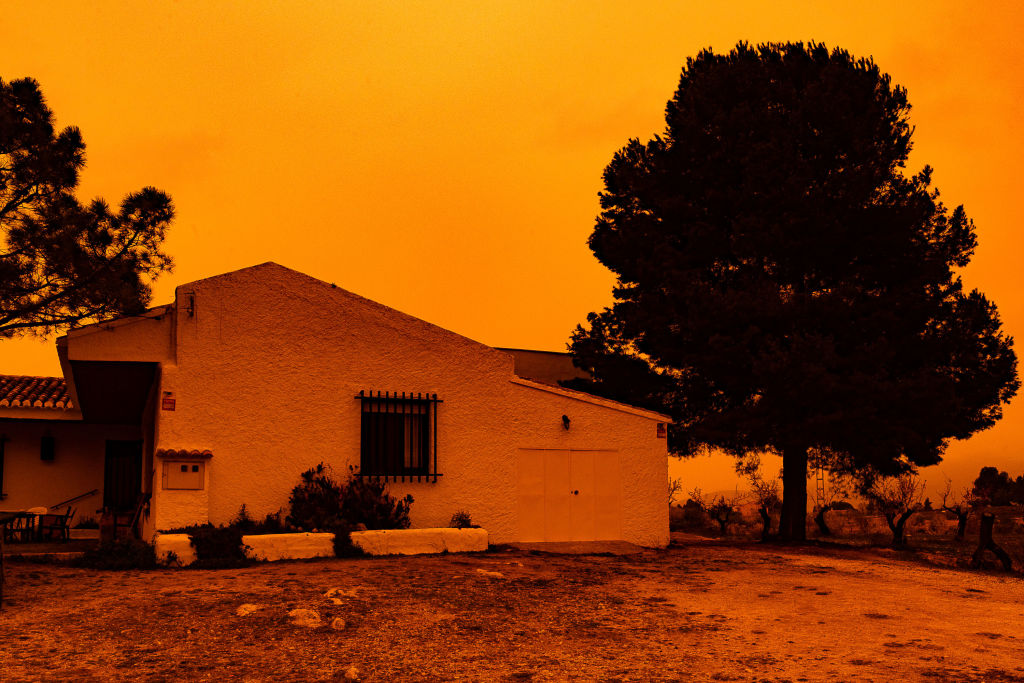
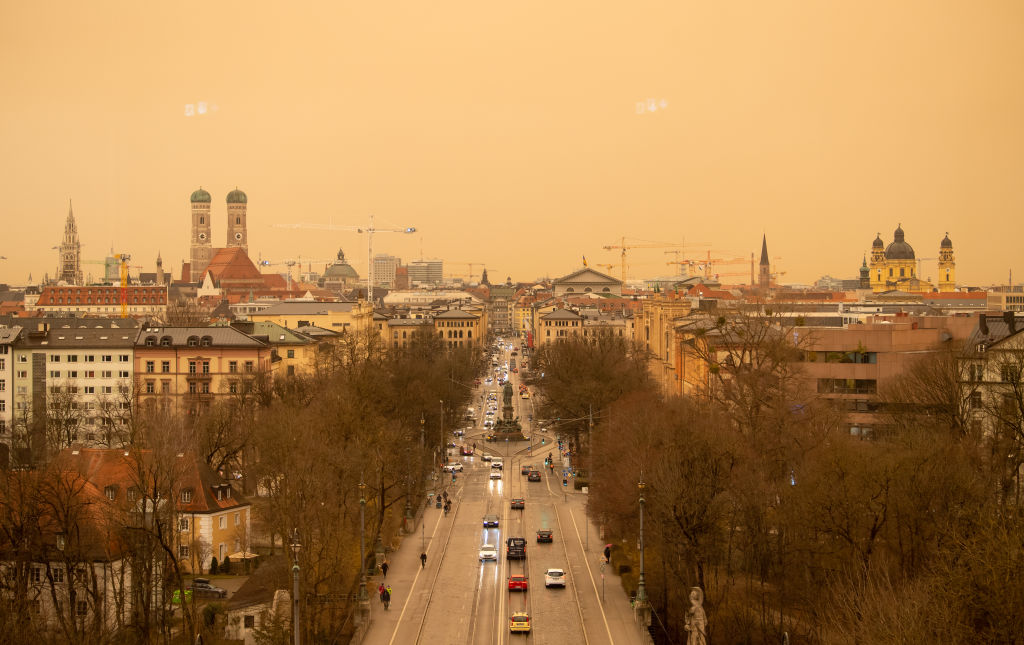
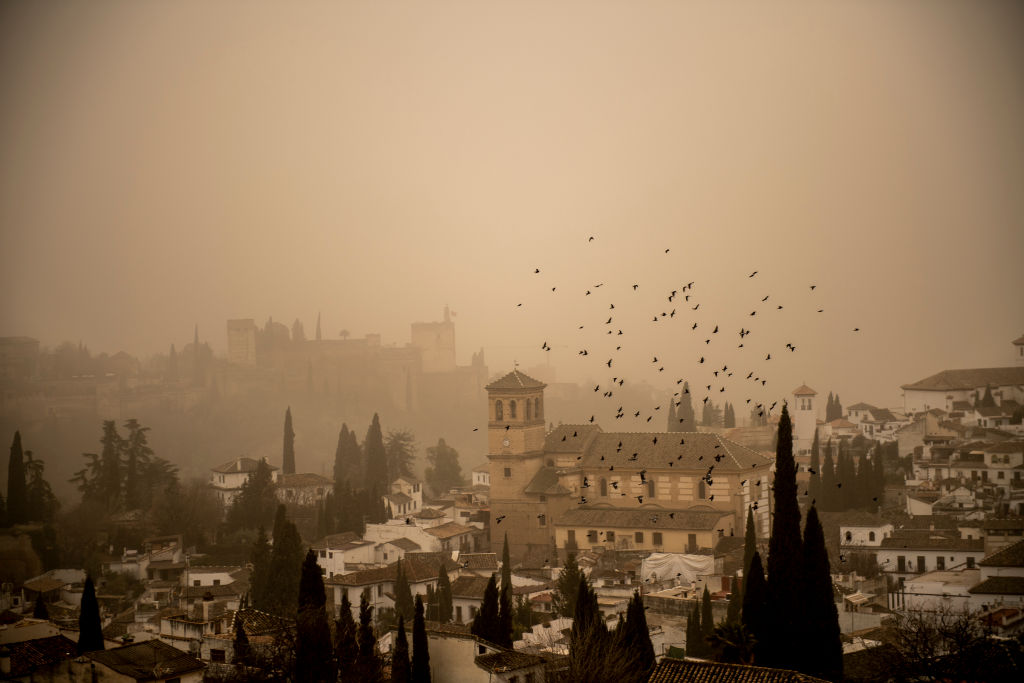
Parts of Spain woke up on Tuesday with streets covered in dust and the sky tainted in an orange hue as Storm Celia pushed dust from the Sahara desert across the peninsula.
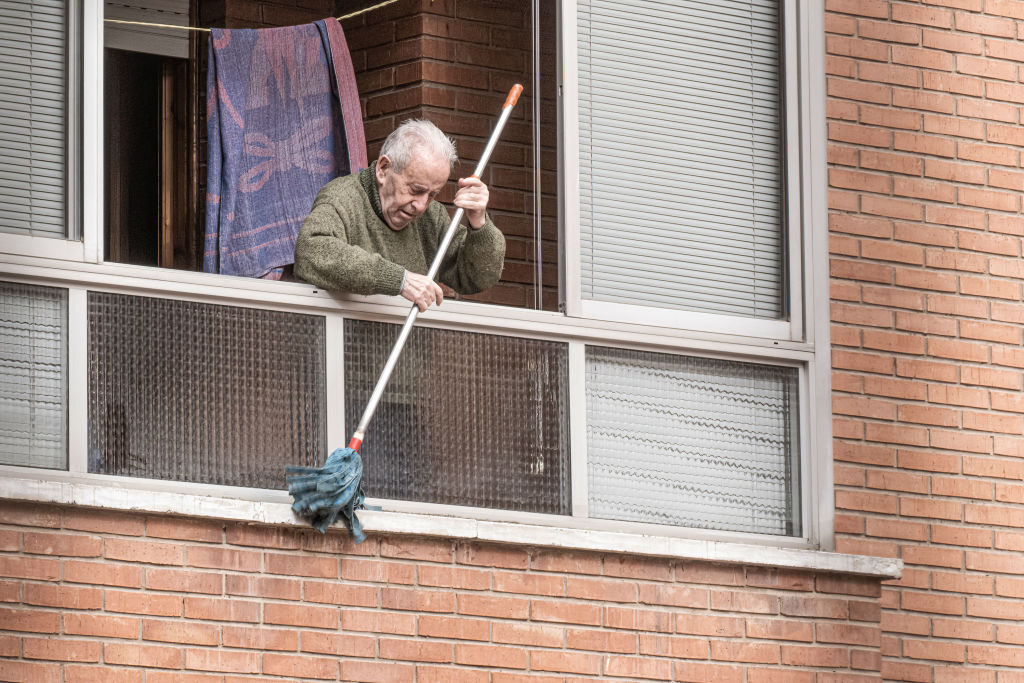
In the Spanish capital, Madrid residents and business owners were seen cleaning terraces, streets, windows and cars which were covered in a layer of dust.
Spain’s national meteorological agency (AEMET) warned the air quality was severely affected by the haze, especially in the centre of the country.
https://www.youtube.com/watch?v=mBbQbA7-VkQ
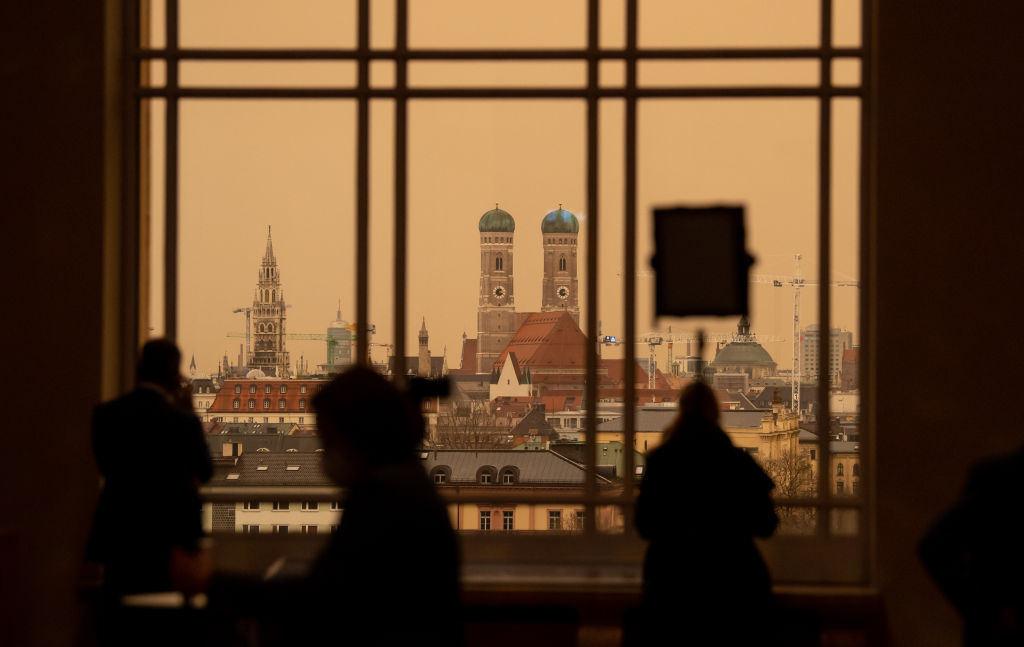
A Saharan dust storm that blew into Europe is entering its second straight day, blanketing major cities on the continent in a cloud of particles.

While visually striking, the dust cloud tinting Europe’s skies in a red/orange hue is also making it hard to breathe in large parts of Spain.
Cleaning crews in Spain, France, Portugal and Germany are working to remove the layer of dust particles that has settled on cars and buildings.
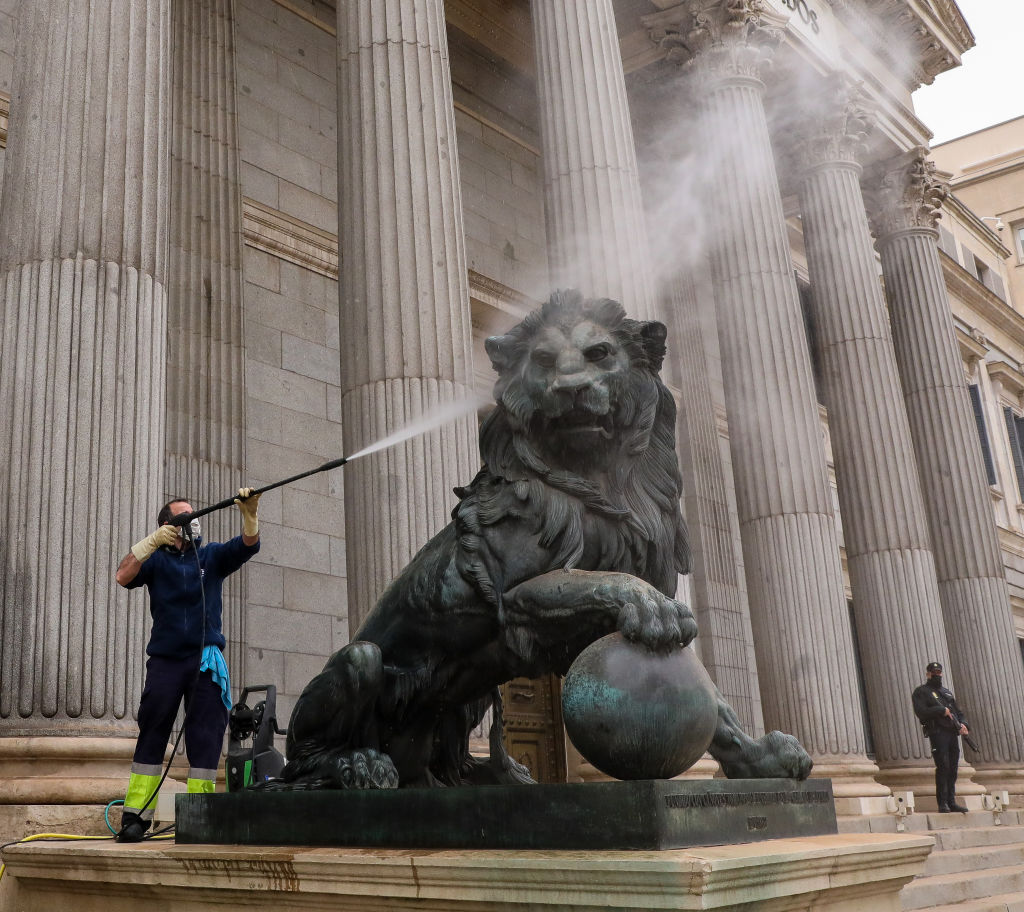
Spain continues to face the brunt of the storm but UK forecasters have predicted that the cloud will also reach the British Isles.
Spain’s national air quality index deemed most of the southern and central regions of the country to have “extremely unfavourable” air quality.
The European Union’s Copernicus Atmosphere Monitoring Service said that is tracking the dust cloud and that air quality has also degraded in Portugal and France.
Spanish authorities are recommending that people wear face masks and avoid exercising outdoors, especially those with respiratory diseases.
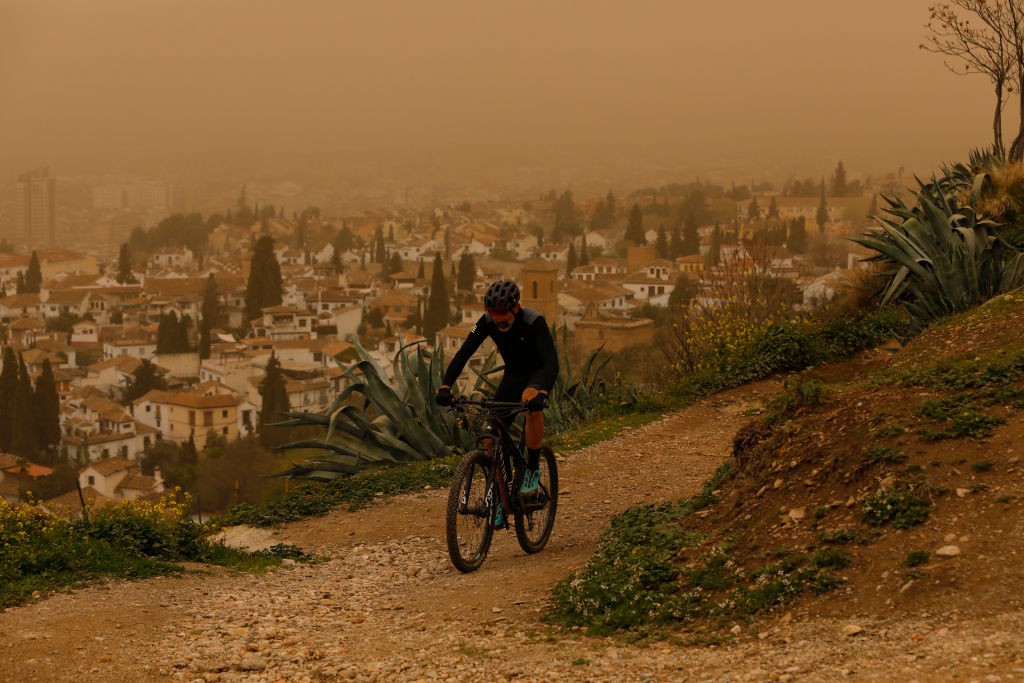
Rubén del Campo, a spokesperson for Spain’s weather service, told AP News that “The air will then begin to clear little by little, although some floating dust will reach the Canary Islands (in the Atlantic Ocean) over the weekend.”
On Spain’s southern coast, the dust particles from the storm mixed with rain over Málaga.
“It is like it was raining mud,” Álvaro López, a student at the University of Málaga, said to AP News.
“I was in the car this morning and mud was literally falling.”
The cloud started when a storm pushed a mass of hot air from the Sahara Desert over the Mediterranean Sea. That same storm brought some much-needed rain for Spain’s drought-ridden crops, but also pushed temperatures up to 20 C.
Spain’s weather service characterized the dust storm as “extraordinary and very intense.”
Del Campo is unsure if climate change is the direct cause of this dust storm, but he noted that the recent expansion of the Sahara Desert has made larger dust storms far more likely — increasing the chance that Europe will be affected by future storms.
Extreme weather patterns, which are linked to climate change, may also be playing a part, according to del Campo.
Take a look below for more images of Europe under the dust cloud.
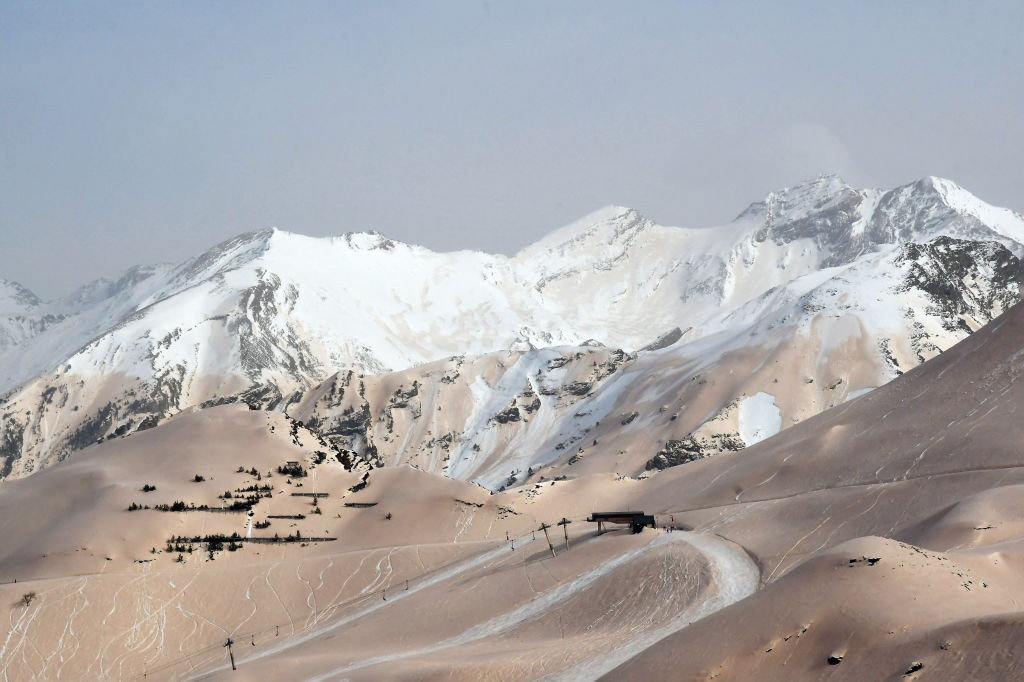

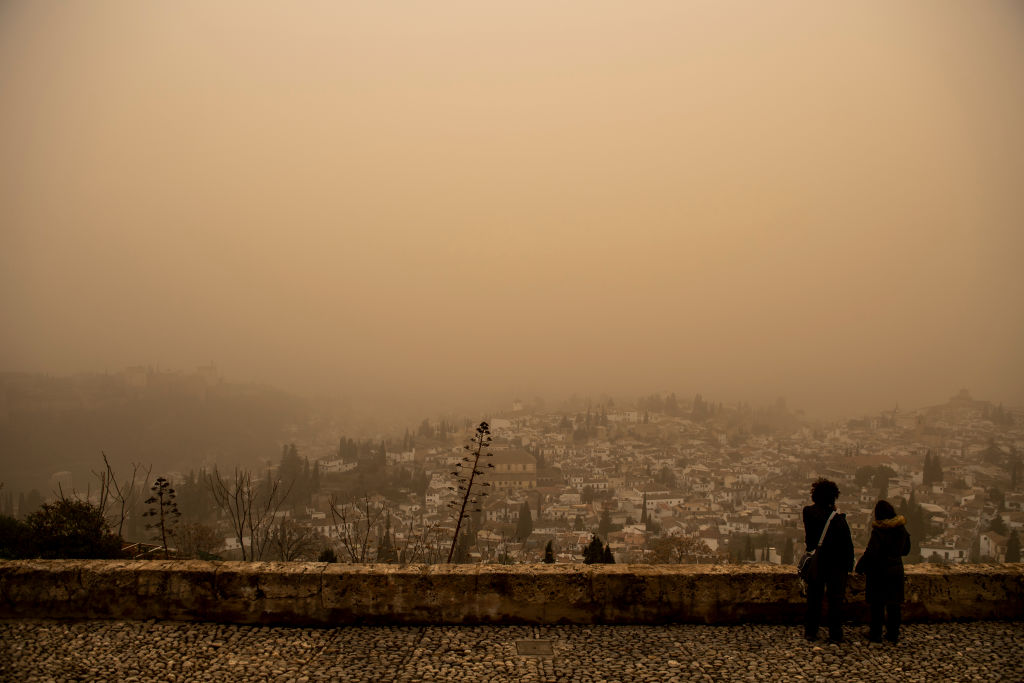

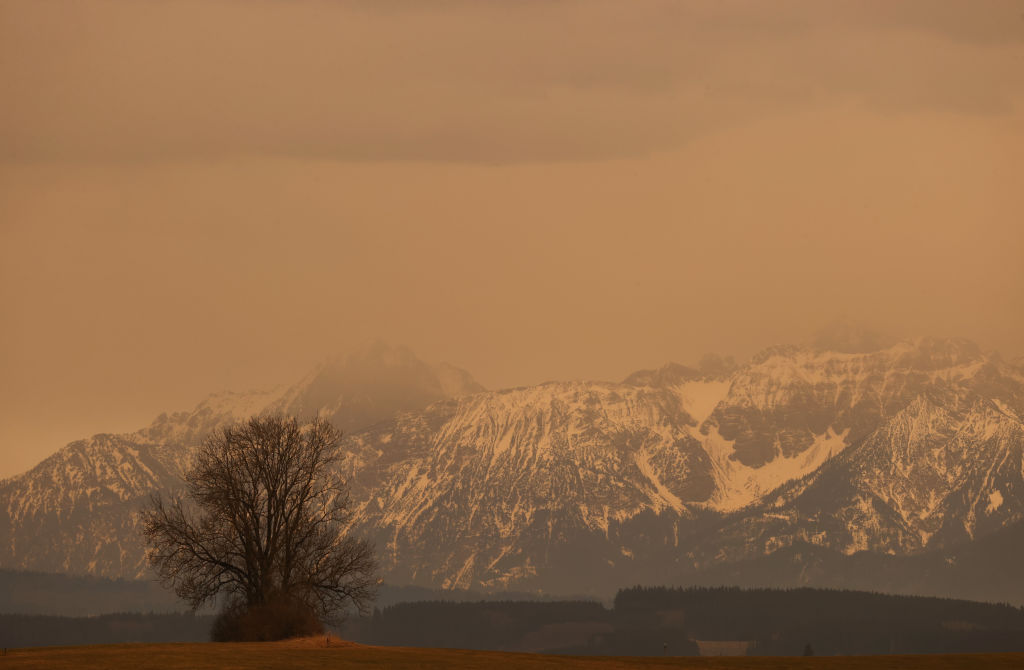
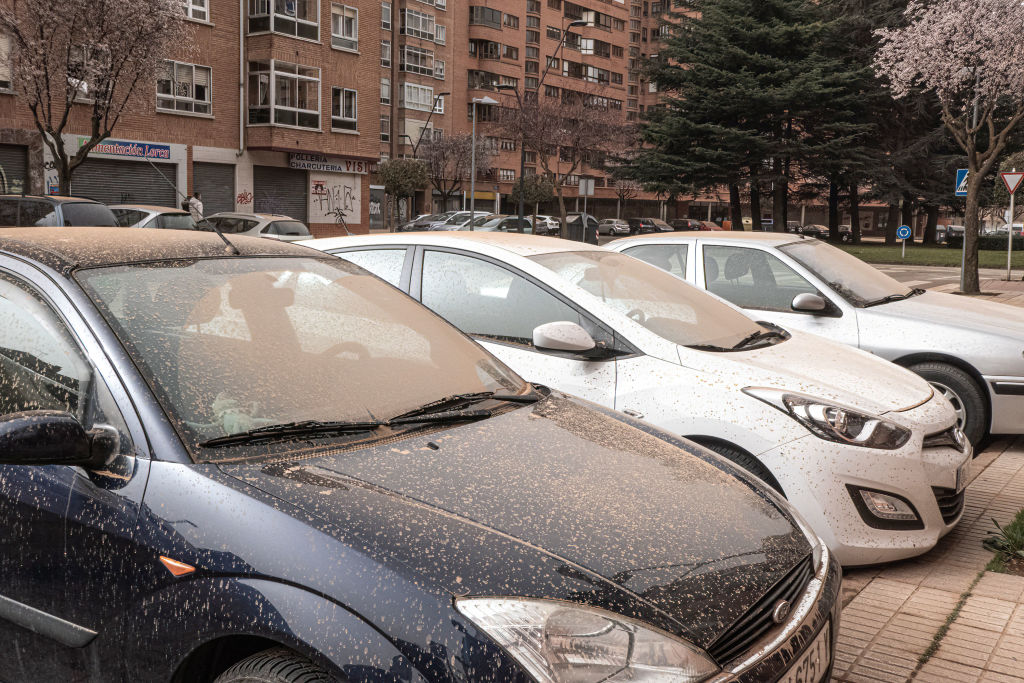
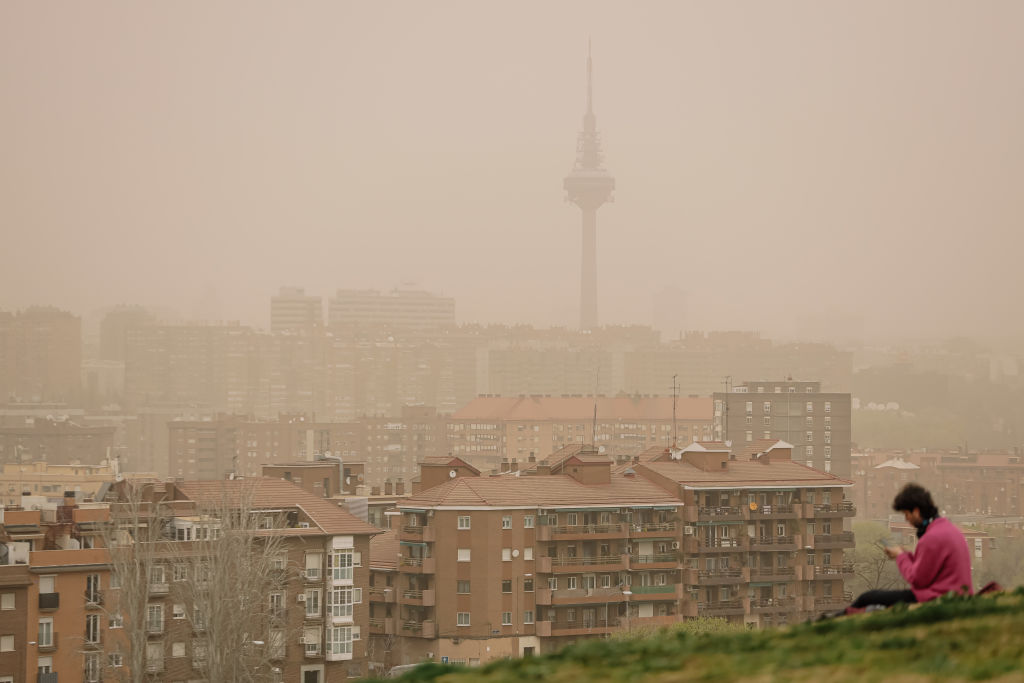
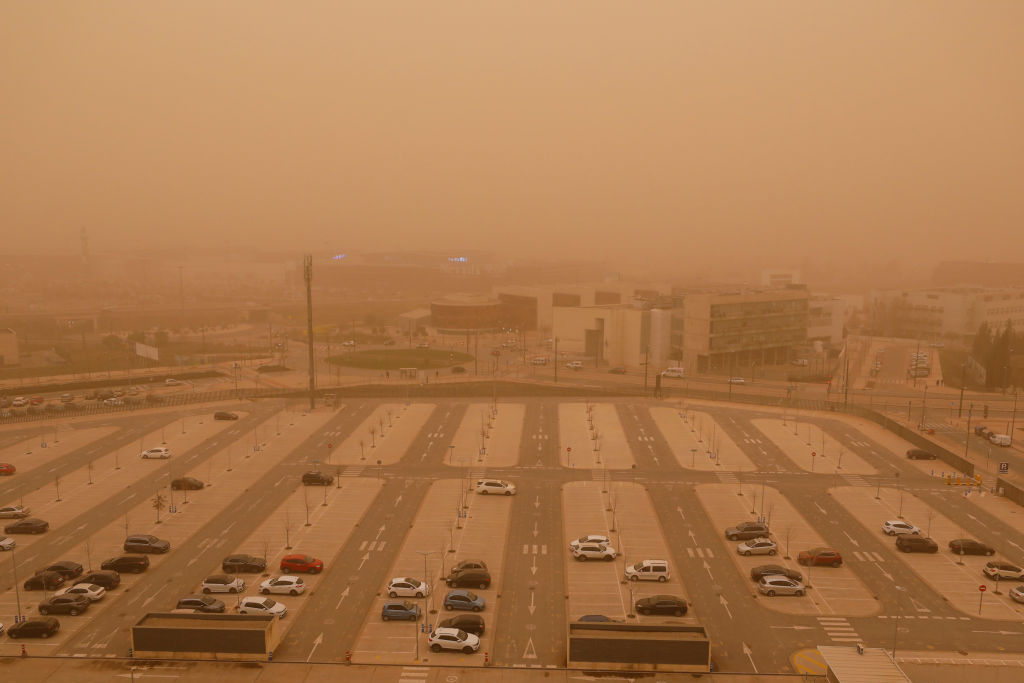
A parking area in Granada is covered by Saharan dust. Álex Cámara/Getty Images
REPOSTED FROM:
https://globalnews.ca/news/8686538/saharan-dust-storm-cloud-covers-europe/
___
Saharan dust
Saharan dust (also African dust, yellow dust, yellow sand, yellow wind or Sahara dust storms) is an aeolian mineral dust from the Sahara, the largest hot desert in the world. The desert spans slightly more than 9 million square kilometers, from the Atlantic Ocean to the Red Sea, from the Mediterranean Sea to the Niger River valley and the Sudan region in the south.[1]

___
Media in category "Sahara dust in Spain"
The following 13 files are in this category, out of 13 total.
.jpg)
.png)
.jpg)
.jpg)


.jpg)
.webp)


.jpg)
SOURCE:
https://commons.wikimedia.org/wiki/Category:Sahara_dust_in_Spain
___
Calima (In German)
 |  |
Monte Lentiscal auf Gran Canaria bei klarem Himmel und bei Calima | |

Die Calima (auch Kalima) ist eine Wetterlage mit Ostwind auf den Kanarischen Inseln und auf den Kapverdischen Inseln, die – vereinfacht – als „Sandwind aus Afrika“ oder „Saharastaub“ beschrieben werden kann. Gelegentlich wird die spanische Bezeichnung Bruma seca („trockener Dunst“) verwendet.[1]
Merkmale
In der Regel wird die Wetterlage auf den Kanaren vom Passat bestimmt, der aus nordöstlicher Richtung weht. Bei einer Calima bringt der Wind hingegen von der Sahara mit südöstlicher Strömung trockene, warme Luft und weht feinen Sandstaub mit. Der Hochdruck über der Sahara erhöht zuvor die Temperatur und verringert die Luftfeuchtigkeit.[2] Die Sicht ist dann leicht getrübt, das Licht wird rötlich gebrochen, die Niederschlagsneigung bei der geringen Feuchte ist aber sehr gering. Es kann im Flugverkehr zu Problemen kommen: Im Februar 2020 musste während einer besonders heftigen Calima der Flugbetrieb auf den Kanaren für zwei Tage eingestellt werden. Aufgrund des hohen Staubgehaltes der Luft ist das heiße, trockene Wetter nicht angenehm und führt leicht zu Reizungen der Atemorgane.[3]
CONTINUES:
https://de.wikipedia.org/wiki/Calima
___
eof
