
.

- Alarmingly, many minors are accused of “hostile terrorist activities”, a category that suggests attacks against civilians, although in practice most cases concern political acts or confrontations with military forces.
- In many records, the evidence is weak or non-existent. - Every year between 500 and 700 minors palestinians like Tarek are arrested and prosecuted in military courts.
- During decades, and especially during the first Intifada, thousands of children have been detained.
- The latest report from the NGO Defense for Children International - Palestine (DCIP) from 2020 it indicates that the majority of the detained children had not been convicted of any crime.
- Israeli military law classifies Palestinians differently from international standards.
- The psychological impact and coercion techniques.
- Documented cases of physical attacks on the genitals and threats of sodomy with objects.
___
Opinion OCCUPIED WEST BANK
9 min read
Detained in the dark: the suffering of Palestinian children under the Israeli military system

“I couldn't see anything, only hear my family crying”, explained Tarek*, a teenage Palestinian of just 12 years old, who was detained by Israeli forces in 2025 in a village in the occupied West Bank, to his lawyer from the Military Court organization. Watch (MCW). He said that violent knocks on the door woke him up and that several soldiers quickly broke into his house. Her mother screamed her name, but they wouldn't let her near her. Not knowing why he was being detained, the soldiers handcuffed Tarek with pain-causing zip ties and covered his eyes.
He was then taken to a military vehicle, kept on the ground, where he was slapped, kicked and hit in the back with a gun. At one of the stops, a doctor asked him questions without looking at him. Tarek told him that the zip ties were hurting him, but he got no response. When they arrived at the interrogation center, still at dawn, they left him waiting outside, cold and sleepy. When they finally took him inside, his hands were still tied. “They asked me many questions. Sometimes they yelled at me, other times they told me things that scared me. They told me that if I didn't respond the way they wanted, I would be detained for a long time. I just wanted to go home”.
His mother was unable to accompany him during detention or interrogation, nor did she receive official notification of her son's whereabouts. Under Israeli military law, parents do not have the right to be present during interrogation, although authorities may allow this on a discretionary basis. Tarek also did not see a lawyer nor did he know that he had the right to remain silent. They showed him a document in Hebrew and told him to sign it, he did so without understanding that he was signing a confession.
In the cell, other children told him that he had been lucky: they had been forced into painful positions, pushed against walls or barbed wire, or left in isolation. Tarek appeared in military court 11 days after his arrest. It was the first time he had seen his mother and his lawyer. Four months later he was released, but he continues to suffer nightmares and wakes up thinking that the soldiers will re-enter his house.
A system that begins near settlements
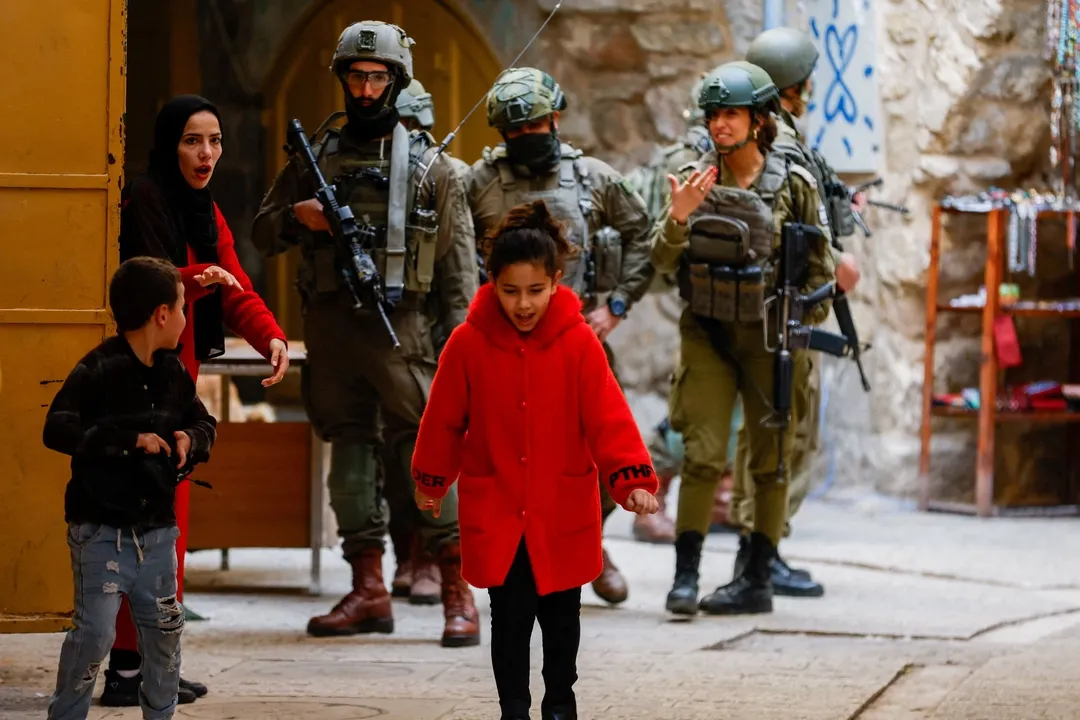
While much of the world closely follows the tragedy in Gaza and the land grab in the occupied West Bank, every year between 500 and 700 minors palestinians like Tarek are arrested and prosecuted in military courts.
During decades, and especially during the first Intifada, thousands of children have been detained.
Since 2000 more than 13,000 Palestinian minors have been interrogated, prosecuted and imprisoned.
In fact the latest report from the NGO Defense for Children International - Palestine (DCIP) from 2020 it indicates that the majority of the detained children had not been convicted of any crime, but were in preventive detention under the administrative detention mechanism, which allows imprisonment without charge or trial for periods of up to six months, renewable indefinitely.
Under occupation in the West Bank, many of these detained children live within two kilometers of an Israeli settlement or roads used by settlers, areas protected by the Israeli army, which maintains a strong military presence in nearby Palestinian communities, generating friction, raids and protests. In this context, minors are often accused of crimes such as insulting a soldier, throwing objects —including stones— or attacking property.
Israeli military law classifies Palestinians differently from international standards: a “child” is under 12 years old; between 12 and 14 they are considered “young people”; and between 14 and 16, “young adults”. From the age of 16, they are judged as adults.
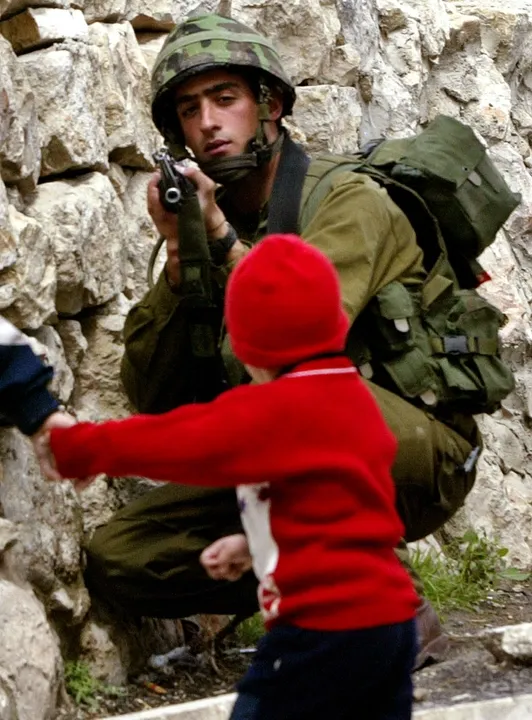
Alarmingly, many minors are accused of “hostile terrorist activities”, a category that suggests attacks against civilians, although in practice most cases concern political acts or confrontations with military forces. In many records, the evidence is weak or non-existent.
Despite Israel's lack of transparency in this process, the figures have been reconstructed with partial data from the Israeli Prison Service, daily monitoring by Defense for Children International – Palestine lawyers, and counts from Palestinian and Israeli organizations documenting each arrest. A significant portion of these minors are transferred to detention centers within Israel, preventing their families from visiting them, as Palestinians need special permits to enter, authorizations that are rarely granted.
Military courts, limited defense and linguistic disadvantages
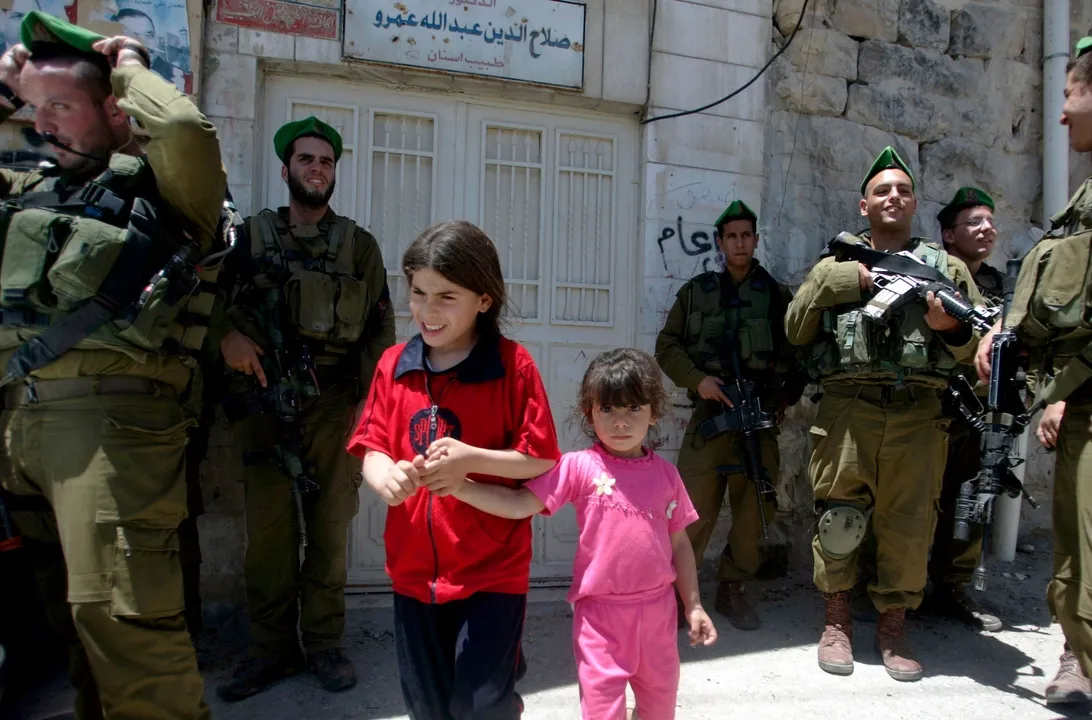
Without legal assistance from Israel's military authorities, most lawyers representing Palestinian minors in military courts are Palestinians working for the Palestinian Ministry of Justice or local NGOs. Families with more resources can hire private lawyers, Palestinian or Israeli, and fully cover the costs.
The trials take place in Hebrew, with simultaneous translation carried out by a soldier, whose linguistic competence varies.
Military orders, minutes and sentences are also in Hebrew, putting Palestinian lawyers at a clear disadvantage.
Detention without evidence
The systematic denial of bail is one of the most critical features of the system. As a result, most cases are resolved through plea deals, such as the case of Rami*, a 13-year-old Palestinian boy. In 2022, he was arrested during a nighttime raid on his home on the outskirts of the city of Hebron. Armed soldiers entered while he was sleeping and pulled him out of bed without allowing his mother to approach. They tied his hands with plastic zip ties that caused him pain and covered his eyes before transferring him to an interrogation center. At the initial hearing, his Military Court Watch (MCW) attorney requested bail, arguing that there was no evidence to justify his detention. The military court denied it, a common practice in most cases, as documented the organization.
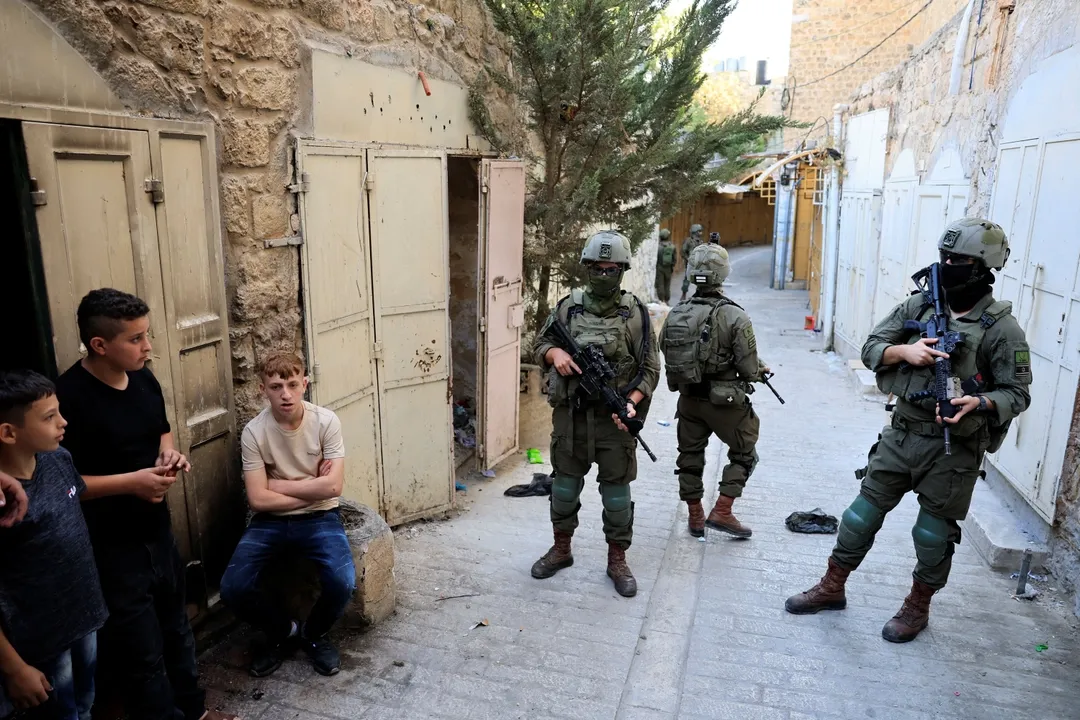
Faced with the prospect of being detained for weeks or months without seeing his family, Rami accepted a plea deal on a lesser charge, even though he insisted he had committed no crime. His lawyer explained that this dynamic is common: the impossibility of obtaining bail pushes minors to accept plea agreements to regain freedom as soon as possible and return to their families.
Today, accepting charges often leads to a faster and, in many cases, shorter sentence. This explains why military courts register a 99% conviction rate. The consent of the accused, known in English as plea bargain, thus becomes the only practical defense tool. Although many lawyers recognize that this mechanism contradicts their professional principles, they also admit that it is the least option harmful for your clients.
In cases where the trial could last two years, a minor accused of throwing stones may prefer to accept a nine-month sentence rather than risk a longer sentence or lengthy trial. Military law also allows sentencing to be determined based on the age of the defendant on the day of sentencing, not the day of the alleged crime. For 14- or 15-year-olds, this may mean being convicted as adults if they turn 16 during the trial.
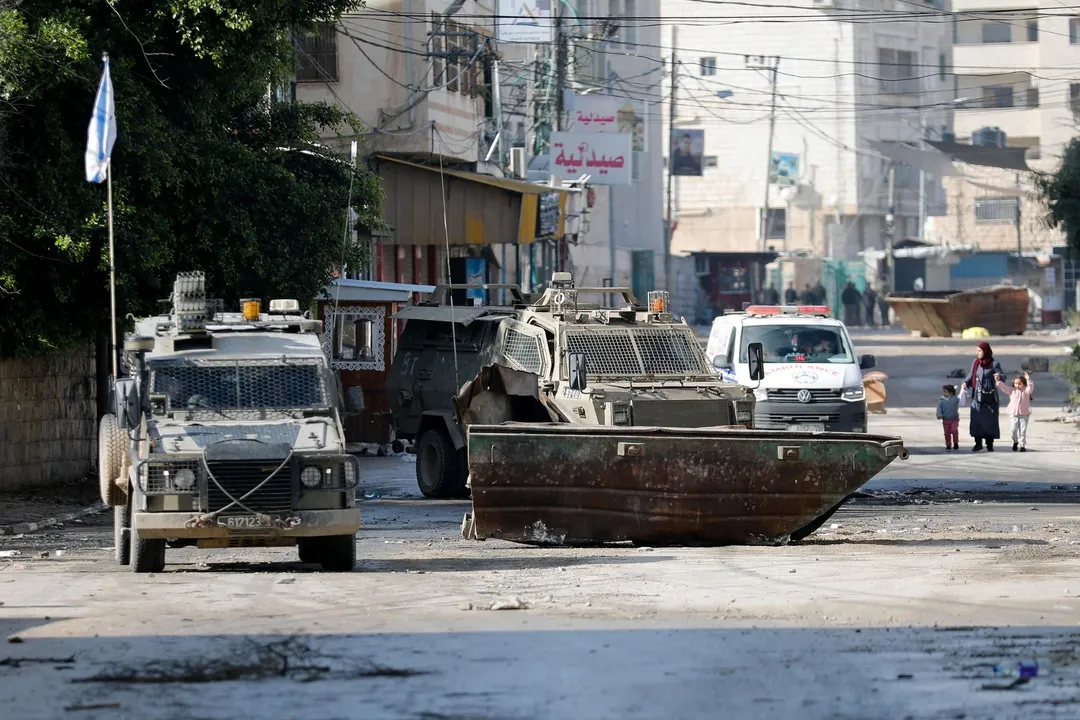
Cases that illustrate a pattern
In 2011, Ahmad*, a 14-year-old Palestinian boy, was accused of throwing stones near a road used by settlers. His lawyer presented medical documents showing that Ahmad, who suffers from thalassemia, was in the hospital receiving a blood transfusion on the day of the alleged incident. The judge accepted the evidence, but still imposed a fine of 5,000 shekels (about $1,300) or the equivalent in days in prison.
The family could not pay it and it was necessary to organize a collection to prevent the child from remaining imprisoned.
Nabil*, another eight-year-old Palestinian boy, was arrested in 2010 by mistake because he shared a name with another boy accused of throwing stones. Although he was well below the age of criminal responsibility, he was detained during the early hours of the morning without his identity being verified. Cases like this are not exceptional: arrests based on incomplete or erroneous information are frequent.
The psychological impact and coercion techniques
Psychological damage varies depending on the degree of violence during detention and interrogation. Night arrests are especially traumatic. Many children report not receiving water or food for hours or days. Others describe insults directed at them or their mothers and sisters. Some report being forced to strip naked upon arriving at the detention center.
Sexual threats, including rape, are becoming more frequent. They have documented cases of physical attacks on the genitals and threats of sodomy with objects. Minors are also pressured to report on other children in their community or to collaborate as army informants.
Even when children are informed of their rights, many report being beaten if they did not confess. Confessions obtained under pressure —physical or psychological— are often used by military judges as a basis for conviction.
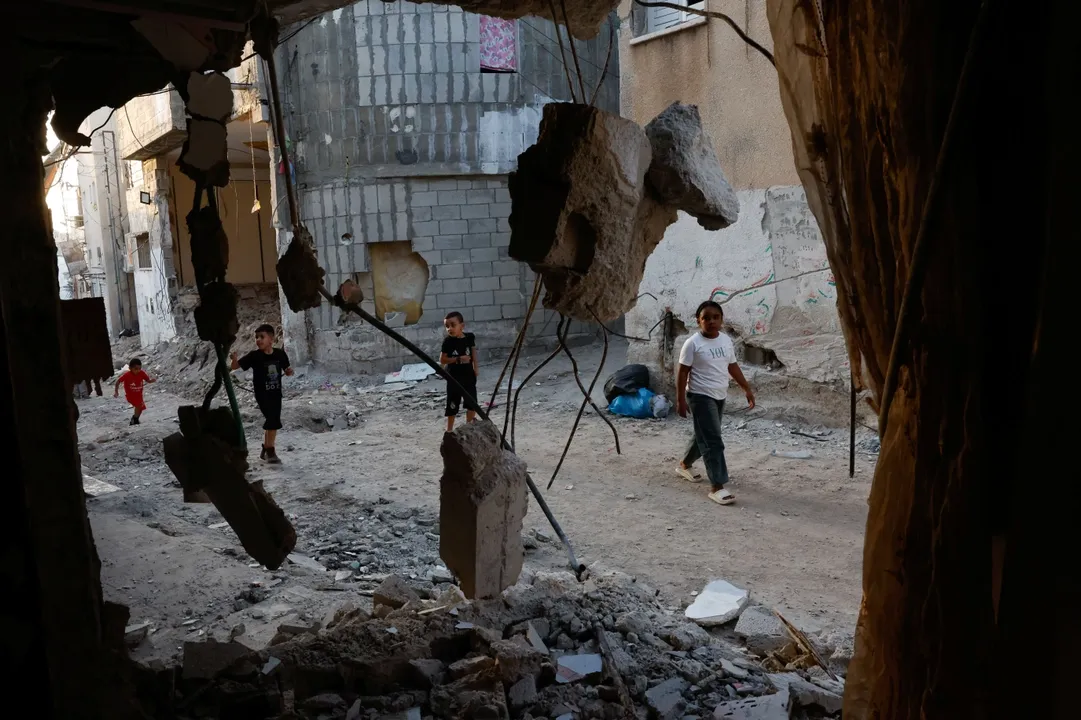
According to the clinical psychologist Sabrina Russo, in the long term this can lead to anxiety and "probably depression”, for minors.
“When they grow up, they will feel a deep sense of injustice, something they carry with them along with their insecurities.
Faced with this daily traumatic reality, Palestinian psychologists they question what they consider the "simplified conceptualization of post-traumatic stress disorder". Dr. Samah Jabr, director of the mental health unit of the Palestinian Ministry of Health, said: “There is no ‘post’ because the trauma is repetitive and continuous”.
A system that perpetuates fear from childhood
The cases of Ahmad, Nabil, Rami and Tarek are not exceptions, but examples of a pattern documented for years by local and international organizations. The combination of nightly detentions, unsecured interrogations, language barriers, lack of adequate legal assistance and a judicial system that favors plea deals creates an environment in which Palestinian minors are left unprotected.
As long as the Israeli authorities continue to fail to publish complete data and allow independent monitoring, the situation of these children will remain difficult to document and even more difficult to change. But their stories —told under fictitious names to protect them— reveal a reality that cannot be ignored: a system that, far from offering justice, perpetuates fear from childhood, a reality reflected in the Palestinian people, who remain under military occupation.
*The names of the minors that appear in this note have been changed to protect their identity against possible reprisals against them or their families, a daily reality in Palestine.
SOURCE:TRT Spanish
SOURCE:
https://www.trtespanol.com/article/a2560e566021
___
eof
